Are Free Walking Tours In Paris Worth It?
An honest look at whether pay-what-you-want walking tours in Paris deliver, covering how the model works, what the walks actually include, and what to expect at the meeting point.
 By Julien Moreau, Paris Free Experiences Specialist and Local City Guide
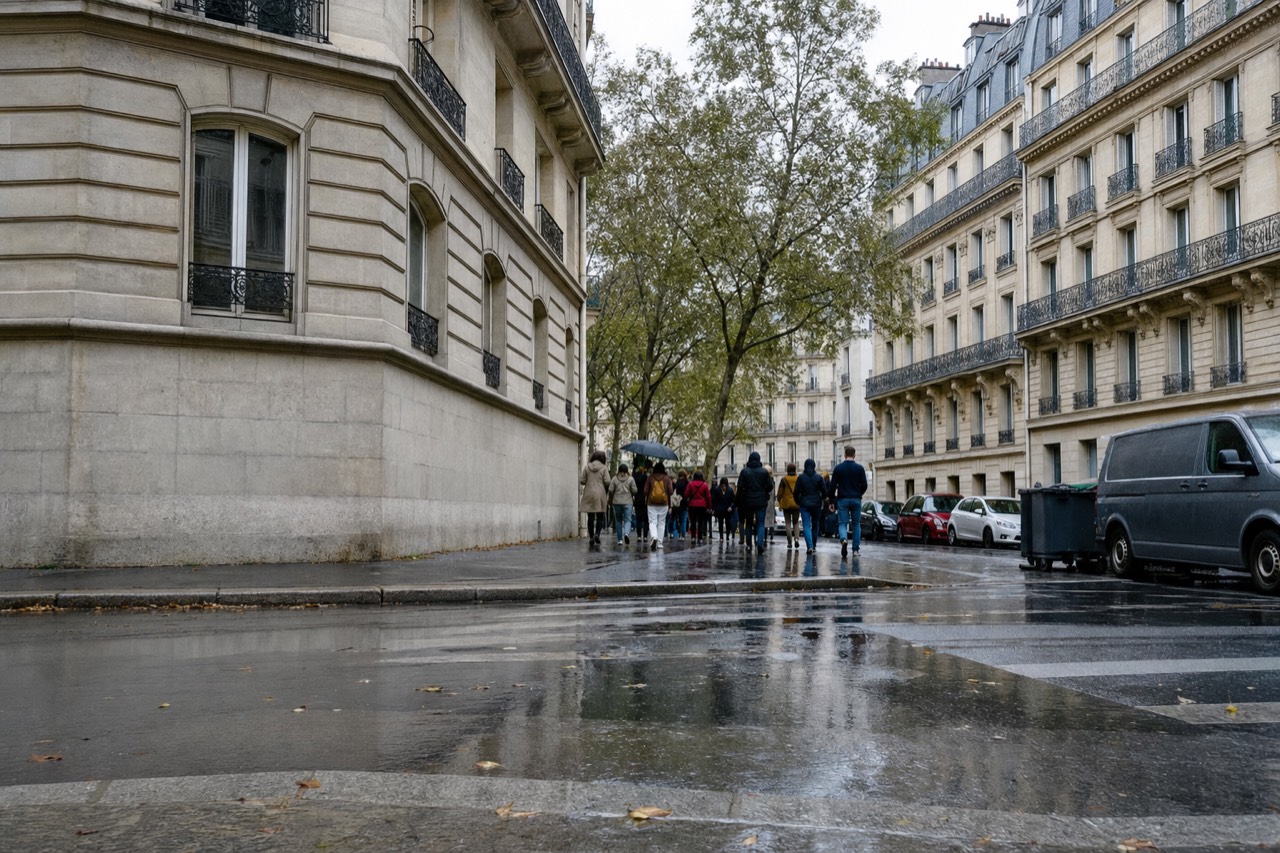
Yes, for most visitors they are, and the reason is structural: a free walking tour is the only guided product in Paris where the guide's income depends entirely on your verdict at the end. The walks listed on this site are run by independent local guides and listed on GuruWalk, a marketplace that takes no payment at booking. You reserve a place, walk for two to three hours, and hand the guide cash or a card payment afterwards. That model filters out weak guides faster than any prepaid tour does.
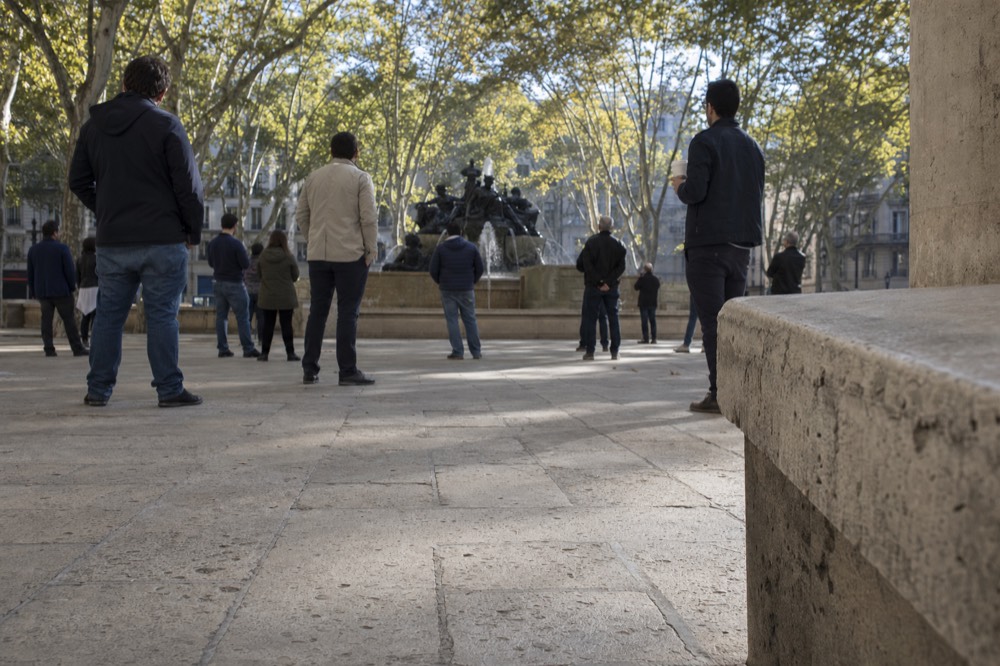
The honest answer has caveats, and this article works through them. Booking is free but not always optional: several Paris operators cancel a walk if fewer than five people register, and one refuses parties of seven or more on the free product. Since 1 July 2026, no free tour can casually guide you inside Notre-Dame, because the cathedral now requires external guides to book ahead and hire its audio headsets (see What Is The Best Way To Tour Notre-Dame?). And the tip is real money: the operators themselves publish guidance ranging from about 12 euros to as much as 50 euros per person, so "free" means free to book, not free to walk away from politely. Since every free walking tour in Paris is now booked through an app or a website, the tour app you choose changes what you pay, who runs the walk, and what happens at the meeting point (see Best Tour App).
Against that, consider what the alternative costs. The Louvre now charges 32 euros for most non-European visitors (checked September 2026), and a paid small-group walking tour in Paris typically runs 25 to 35 euros per person before the guide's own tip expectation. A pay-what-you-want walk puts a local, licensed or long-practising guide in front of you for two hours at zero financial risk. If the walk is bad, you give little. If it is good, you give what it was worth. No other product in the city works that way.
How Does A Free Walking Tour In Paris Actually Work?
The model is simple: there is no fixed price, booking takes no card and no deposit, and at the end of the walk each walker gives the guide what they think the two hours were worth, in cash or by card where the listing allows it. These are not this site's own tours. Each walk is run by an independent local guide and listed on GuruWalk, a Spanish marketplace that connects walkers to guides. Booking a place costs nothing, and some Paris listings note that the guide accepts card or electronic payment for the contribution at the end (checked September 2026).
The economics behind the model explain why guides take it seriously. GuruWalk charges guides a per-head fee for each booked walker, reported at around 2.50 euros per person by industry trackers in August 2026, so a guide who delivers a weak walk to a full group can end a two-hour tour owing the platform money. The tip is not a bonus on top of a salary. For most of these guides it is the salary.
A few operational rules matter before you book. Walkative, one of the larger operators, requires registration in advance, cancels if fewer than five people are signed up, and refuses parties of seven or more on the free product (checked September 2026). Weather is rarely the problem: the same operator states it does not cancel for rain, snow or temperature, only for heavy storms or guide illness. The language trap is more common than the weather one. Paris walks are language-siloed, so booking an English walk when you meant the Spanish departure, or the reverse, is a real and frequent error.
One 2026 rule change reshaped every Paris walking tour, free or paid. From 1 July 2026, any guided tour of Notre-Dame led by an external guide requires prior booking with the cathedral and cathedral-hired audio headsets, regardless of group size, with headset hire priced by group size from 30 euros for 6 to 10 people up to 45 euros for 21 to 25 (checked September 2026). The cathedral states the rule on its own group-booking pages. A free city-centre walk can still pass Notre-Dame and talk about it from outside, and most do, but do not expect your guide to talk you through the interior.
What Do The Best-Rated Paris Walks Actually Cover?
The strongest walks cluster in three areas: the historic centre around Ile de la Cite and the Marais, Montmartre, and the Latin Quarter, and the best-rated of them run 90 minutes to 2 hours 30 with a named meeting point and a stop count published in advance. Ratings below belong to GuruWalk, not to this site, and each was current when this article was prepared.
Start with the historic centre, where the depth of the roster shows. The Every-Side Centre Walk, 7 Stops runs 2 hours and 30 minutes in English from Charles de Gaulle-Etoile and carries a 4.96 rating across 476 reviews (checked September 2026). It is the walk this site features most often, because the 7-stop format gives a guide room to go deeper on fewer landmarks rather than sprinting past twenty of them.
The Bilingual Centre Walk, 9 Stops covers the classic core in 2 hours and 15 minutes, runs in English and Spanish from Fontaine Saint-Michel, and holds a 4.9 rating across 2,481 reviews (checked September 2026). For a first-time visitor who wants the postcard Paris, the Louvre courtyards, the islands, the Seine, in one walk with a guide who can switch languages for a mixed group, it is the most reliable pick in the roster.
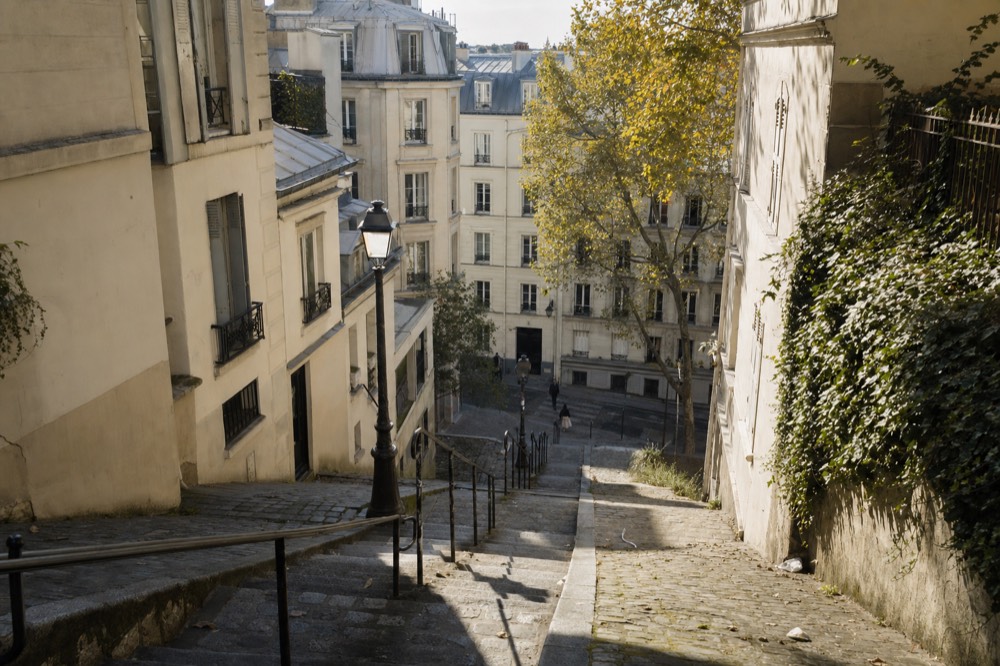
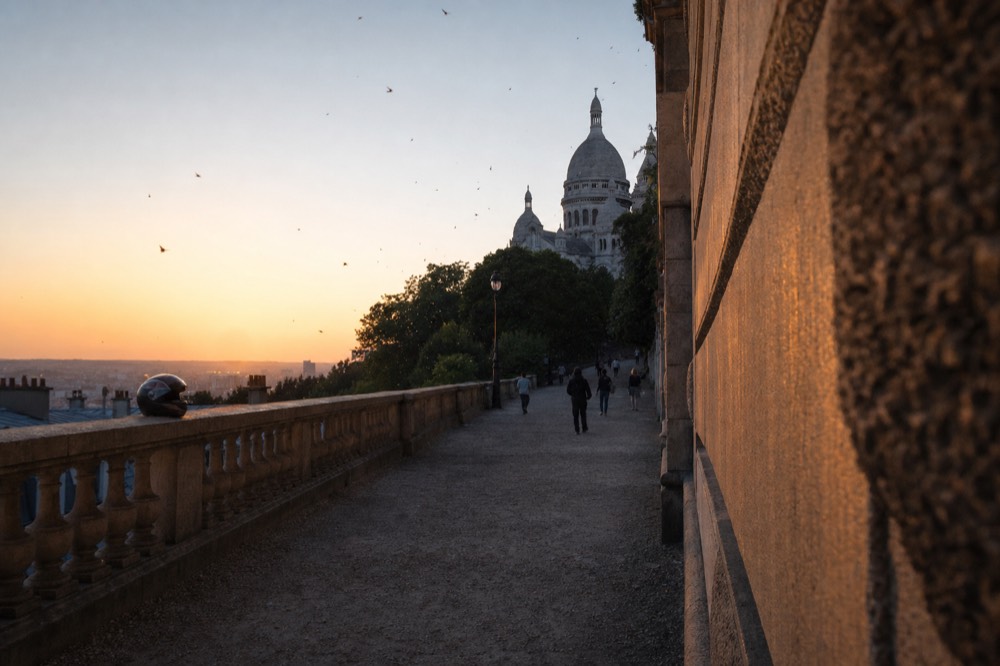
Montmartre is the second cluster, and the ratings there are even higher, which surprises people who only know the district from its crowds. The Bilingual Art and Bohemia Walk runs 2 hours and 30 minutes in English and Spanish and carries a 4.97 rating across 1,001 reviews; the Martyrdom-to-Love walk, also bilingual, holds 4.94 across 623 reviews (checked September 2026). Both start inside the 18th arrondissement rather than at the metro, which matters, because the walk up the butte is half the experience. The Latin Quarter is the third cluster: the Saint-Germain and Saint-Michel walk runs 2 hours from Place Saint-Germain des Pres at 4.96 across 494 reviews, and the Walkative Latin Quarter, 7 Stops covers the same ground from a quayside start at 4.73 across 352 reviews (checked September 2026).
| Walk | Area | Duration | Language | GuruWalk rating |
|---|---|---|---|---|
| Every-Side Centre Walk, 7 Stops | Historic centre | 2h 30 | English | 4.96, 476 reviews (checked September 2026) |
| Bilingual Centre Walk, 9 Stops | Historic centre | 2h 15 | English, Spanish | 4.9, 2,481 reviews (checked September 2026) |
| Bilingual Art and Bohemia Walk | Montmartre | 2h 30 | English, Spanish | 4.97, 1,001 reviews (checked September 2026) |
| Saint-Germain and Saint-Michel | Latin Quarter | 2h | English | 4.96, 494 reviews (checked September 2026) |
The pattern across the table is worth naming. The Paris walks with the highest ratings are not the ones covering the most ground. They are the ones with fewer stops, longer run times and bilingual guides, which is a useful filter if you are choosing between two similar listings. A 7-stop walk over 2 hours 30 gives each landmark roughly twenty minutes of story. A 20-stop walk over 90 minutes gives each one four.
What Are The Catches And Complaints About Free Tours?
Three real complaints survive scrutiny: some walks are sales funnels for paid products, meeting points collide because several operators use the same famous squares at the same hour, and the biggest operators quietly moved some of their walks off the free model entirely. None of these kills the idea, but all three change how you should book.
The funnel complaint is quantified. An industry analysis from June 2026 reports that around 45 percent of free-tour guests convert to paid products, and that guides at some large brands pay a per-guest marketing fee, which creates an incentive to pitch. The defence is that the pitch is usually one minute at the end, and that independent guides listed on GuruWalk, who are the walks this site points to, generally have no paid product to upsell you to.
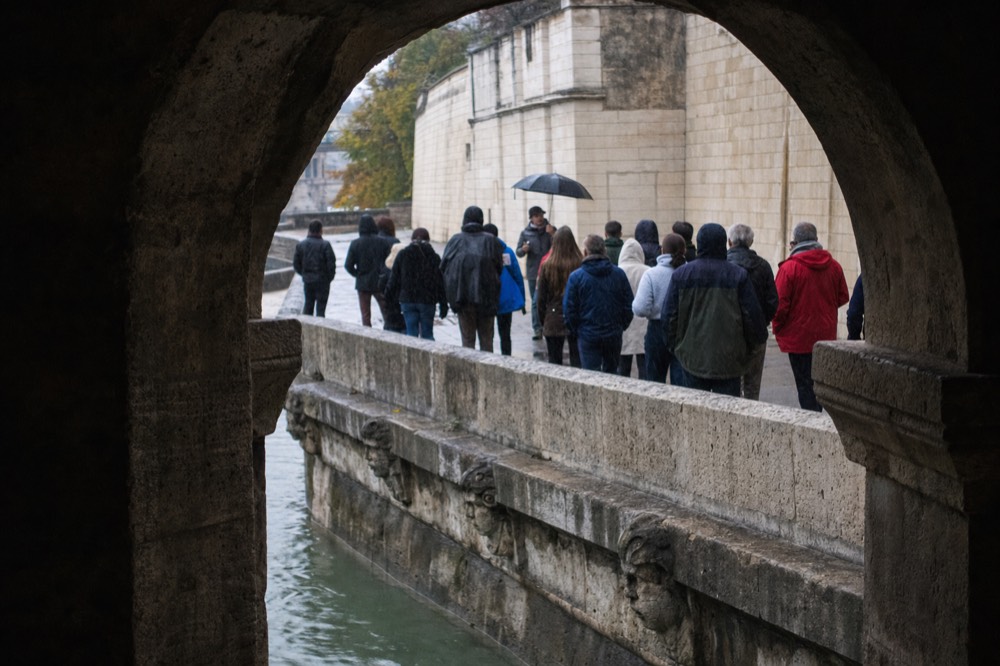
The meeting-point collision is a 2026 operational fact rather than a vague warning. At Fontaine Saint-Michel, one of the most-used meeting points in the city, multiple operators gather at the same time, each identified by a different marker: a white umbrella for one, a red umbrella for another, a yellow umbrella marked Walkative for a third (checked September 2026). Arriving early and knowing your operator's marker is the difference between joining your booked walk and accidentally joining a different one in the wrong language.
The model drift is the complaint worth the most attention. In 2026, one major brand's English Montmartre walk stopped being tips-based on its own calendar and became a prepaid "Select Tour", while the same walk in Spanish on the same page stayed free. Another operator's Marais walk is tip-supported on one booking site and prepaid at 15 euros on another. The lesson is to read the price line before you book: if it says anything other than free with pay-what-you-want at the end, you are looking at a different product with the same name. The walks in the directory on Free Things To Do In Paris are checked to be genuinely free at the time of listing.
How Much Should You Actually Give The Guide?
There is no single going rate, and any page that prints one is inventing it: the official sources disagree, publishing guidance from about 12 euros up to 50 euros per person, so the honest answer is a range with the source named. This site keeps a full breakdown on the tipping question, and the short version is below.
Visit Paris Region, the official regional tourism body, tells visitors a tip of usually around 12 euros is expected (checked September 2026). Walkative tells its guests most give between 10 and 50 euros per person. GuruWalk's own help article for guides says a good guide averages 10 euros per traveller, while its walker-facing Paris page prints a guideline of between 15 euros and 50 USD, mixing currencies on one line (all checked September 2026). Four official figures, four different numbers. Decide your own before the walk starts, in cash or by card as the listing allows, and do not let a guide's closing pitch reset it.
The only honest rule of thumb is proportional: a two-hour walk from a good guide is worth more than a museum ticket, and 32 euros is what the Louvre now charges most non-European adults (checked September 2026). For a deeper answer, including what to do when a walk disappoints, see how much to tip on a free walking tour in Paris.
Which Free Walking Tour Should You Start With In Paris?
Start with a centre walk that covers the islands and the historic core, because it anchors every other neighbourhood you will visit, then take a Montmartre or Latin Quarter walk on a later day once you know what a good guide sounds like. The first walk teaches you the city's geography; the second and third teach you its characters.
For the first walk, the choice is between depth and breadth. The Walkative! Centre Walk, 9 Stops runs 2 hours 15 from Hotel de Ville at 4.73 across 2,538 reviews, the largest English-language review base in the historic-centre roster (checked September 2026). The Crowd-Free Montmartre walk, 18 stops, takes the opposite approach in the 18th: an hour and a half, 4.82 across 1,389 reviews, built for people who want the back streets rather than the Place du Tertre scrum (checked September 2026). Both are free to book, both pay-what-you-want, and both are run by independent guides listed on GuruWalk.
If you would rather move at your own pace, this site also publishes a self-guided walking tour of Paris you can follow without a guide or a booking, and a directory of free walking tours in Paris covering every neighbourhood in this article. The two approaches combine well: a guided walk on day one, then your own route on day two with the stories still in your head.
For the end of your trip, the bilingual Montmartre walks and the Saint-Germain walk below are the three highest-rated options across the matched ground, and each earns its rating on a different strength: art history on the butte, the martyrdom-to-love narrative, and the oldest quarter of the Left Bank.
The short answers: free walking tours in Paris are worth it for most visitors, booking costs nothing, the tip is expected and real, and since July 2026 no free tour guides the interior of Notre-Dame. The questions below cover the details that decide whether a particular walk suits you, from booking rules to what happens when a guide disappoints.
Common Questions About Free Walking Tours In Paris
Are free walking tours in Paris worth it?
For most visitors, yes. The walk costs nothing to book, a local guide walks you through one neighbourhood for two hours or more, and you pay only what you think it was worth. The catches are real but manageable: some walks need advance booking, the tip is expected, and since July 2026 no free tour guides inside Notre-Dame.
Do I have to pay anything when I book?
No. Booking a GuruWalk listing takes no card and no deposit. Payment happens only at the end of the walk, directly to the guide, in cash or by card where the listing says it is accepted.
Can I just turn up without booking?
It depends on the operator, so treat booking as the default. Some Paris walks cancel if fewer than five people register, and some refuse large parties on the free product. Booking a free place costs you nothing and protects the walk from being cancelled.
Are the guides real licensed guides?
They are independent local guides who list their own walks on GuruWalk. Some hold official guiding credentials, others are long-practising locals. The pay-what-you-want model means a guide who cannot hold a group does not last, which is a stronger filter than any licence.
Will the tour go inside Notre-Dame?
Not with the guide talking you through it. Since 1 July 2026, external guides must book a slot with the cathedral and hire its audio headsets, which free tours do not do. Walks still pass the cathedral and cover it from outside, and entry on your own is free.
What happens if the walk is bad?
You give less, or nothing. That is the entire design of the model. Decide your figure before the walk starts so a closing pitch cannot move it, and leave an honest review on the walk's GuruWalk page so the next walker knows.