What Is The Best Way To Tour Notre-Dame?
Find the best way to tour Notre-Dame Cathedral in Paris, from free entry and reservation tips to guided walking tours that cover the exterior and history, plus how to spot fake tickets.
 By Julien Moreau, Paris Free Experiences Specialist and Local City Guide
What Is The Best Way To Tour Notre-Dame?
The best way to tour Notre-Dame is to book a free walking tour that covers the exterior and the island’s history, then enter the cathedral on your own, free of charge, with an optional timed reservation to skip the queue. This avoids the fake-ticket scams, respects the new 2026 interior guiding rules, and leaves you free to explore the towers or treasury separately at your own pace.
Notre-Dame de Paris reopened in December 2024 after the 2019 fire, and more than 11 million people walked through its doors in the first year alone. The cathedral is free, the reservation is free, and anyone selling a paid entry ticket is running a scam. Yet the sheer volume of visitors, the separate paid monuments attached to the building, and the recent rule change that makes it harder for guides to speak inside mean that a single “best way” really does exist.
The answer has two parts. First, take a free walking tour that includes the cathedral’s exterior, the archaeological crypt (though the crypt itself is closed for conservation since June 2026), and the story of the Île de la Cité from its Celtic origins through the Roman period to the medieval masterpiece. Second, walk inside on your own, either with a free timed slot booked a day or two ahead, or by joining the no-reservation queue, which often moves faster than the line suggests. The towers, the treasury and any guided interior visit are paid extras, and they are separate from the nave.
The cathedral’s own official warning, displayed on its reservation page, spells out the scam: “Faux billets payants, l’entree est 100% gratuite, la reservation se fait uniquement sur notre site officiel. Aucune plateforme tierce n’est autorisee a vendre.” Visitors have paid up to 60 EUR for counterfeit fast-track tickets sold through mirror websites, and the cathedral confirms those tickets are worthless. The real booking window opens only a few hours or a day or two before your visit, so any site offering month-ahead Notre-Dame slots is not the cathedral.
Can You Visit Notre-Dame For Free?
Yes, entry to Notre-Dame Cathedral is completely free for everyone, every day, with no ticket and no purchase required. A free, optional timed reservation is available on the official site to reduce waiting time, but walk-ins are always accepted. The towers, the treasury and the archaeological crypt are separate, paid attractions, and the crypt is currently closed.
The cathedral’s own words are unambiguous: “Notre-Dame Cathedral is open to all, freely and without charge.” The reservation page states that booking is “entirely optional” and “intended solely to streamline entry and reduce waiting times.” Visitors without a reservation join a separate queue on the left when facing the facade, marked with blue banners, and reports from 2025 and 2026 describe waits of 8 to 25 minutes even when the line looks long, with an outlier of about 90 minutes around midday on a Saturday in mid-March 2026. Arriving at 09:00 on a weekday often means walking straight in.
The free reservation is released only a few hours or a day or two ahead, and it cannot be locked in weeks in advance. The cathedral warns that attempting to book too early, too often, or from too far away may temporarily block your access. This is a deliberate measure against the bots and resellers who hoard the free slots and sell them back at high prices. The official tourist office, Paris je t’aime, states plainly: “No, contrary to popular belief, the Musee du Louvre is not free on the first Sunday of the month,” but for Notre-Dame the rule is even simpler: it is free every day (see What Is The Cheapest Month To Visit Paris?).
The one genuinely free extra that most visitors miss is the Sunday afternoon great organ recital at 16:00, also free and open to all. The Tuesday evening concerts are ticketed through a separate organisation.
The cathedral is open Monday to Friday 07:50 to 19:00, with a late closing on Thursday at 22:00, and Saturday and Sunday 08:15 to 19:30. Last entry is 30 minutes before closing. The ambulatory and back chapels do not open until 08:45 on weekdays, so an early arrival sees less of the interior. During the week of 31 August to 6 September 2026, the hours were exactly as above, and the cathedral publishes its live schedule on the Affluences platform.
What Are The Paid Parts Of Notre-Dame?
The towers, the treasury and the archaeological crypt are three separate paid attractions, each with its own ticket, and none of them is included in the free cathedral entry. The towers cost 16 EUR, the treasury 12 EUR full or 6 EUR reduced, and the crypt is 11 EUR full or 9 EUR reduced but has been closed since 28 June 2026 for preventive conservation.
The towers are run by the Centre des monuments nationaux, not the diocese, and require a separate reservation. The climb is 424 steps with no lift, and the time at the top is limited to about five minutes. Tickets are 16 EUR, with free admission for under-18s and for EU residents aged 18 to 25, and for everyone on the first Sunday of January, February, March, November and December. There are no on-site sales; even visitors entitled to free entry must book a timed slot in advance. The towers are open 09:00 to 23:00 from April to September and 09:00 to 17:30 from October to March, closed 1 January, 1 May and 25 December.
The treasury is inside the cathedral, accessed from the south ambulatory, and tickets are sold only at the desk inside, with no online booking. It is open Monday to Saturday 09:00 to 18:00, until 20:30 on Thursday, and Sunday 13:00 to 17:30. The treasury holds the relics and liturgical objects, and the 12 EUR full price and 6 EUR reduced price are fixed, with free entry for under-5s, clergy and certain card holders.
The archaeological crypt under the parvis is reported to have closed on 28 June 2026 for preventive conservation, with no confirmed reopening date, so check crypte.paris.fr before planning a visit. When open, it charges 11 EUR full and 9 EUR reduced, with free entry for under-18s and a long list of other exemptions. The crypt is one of the few Paris Musees sites that charge, alongside the Catacombes and the Palais Galliera.
| Part | Price (full/reduced) | Free admission rules | Booking required? |
|---|---|---|---|
| Towers | 16 EUR | Under-18s, EU 18 to 25 residents, everyone on first Sunday of Jan/Feb/Mar/Nov/Dec | Yes, online only |
| Treasury | 12 EUR / 6 EUR | Under-5s, clergy, ICOM/ICOMOS card holders | No, tickets at desk inside |
| Crypt (currently closed) | 11 EUR / 9 EUR | Under-18s, jobseekers, disabled visitors and companion, plus other exemptions | No, walk-up when open |
These three paid parts are entirely separate from the free cathedral visit, and none of them is required to experience the nave, the rose windows or the new liturgical furnishings. A visitor can see the interior, attend a service or listen to the organ without spending a cent.
How Can You See Notre-Dame Without Waiting In Line?
The fastest way into Notre-Dame is to book a free timed reservation on the official site a day or two before your visit, or to arrive at opening time on a weekday. The no-reservation queue moves steadily, and reports from 2026 show typical waits of under half an hour except at peak weekend lunchtimes.
The reservation portal at resa.notredamedeparis.fr releases slots in a rolling window, and the cathedral advises booking “the day before yesterday, the day before, or the same day.” The digital ticket arrives by email immediately, and you join the reserved queue on the right when facing the facade. The no-reservation queue is on the left, marked with blue banners, and it is not a separate entrance but a separate line that merges at the security checkpoint. Long queues at major landmarks are also where a common scam tends to surface, since official sources document pickpocketing hotspots and tricks that target visitors in Paris (see Paris Warnings).
Real visitor reports from Reddit in 2025 and 2026 consistently describe the queue as moving far faster than it looks. A family of four in mid-March 2026 waited about 90 minutes at midday on a Saturday, but the same thread noted that arriving at 09:00 on a Tuesday meant walking straight in. The cathedral processes about 30 visitors per minute, down from the pre-fire rate of 50, to preserve the atmosphere during services. The diocese reported more than 30,000 visitors a day in the first year after reopening.
A practical tip that few guides mention: the ambulatory and the back chapels do not open until 08:45 on weekdays, even though the cathedral itself opens at 07:50. If you arrive very early, you will see the nave and the main altar but not the full circuit of chapels. The cathedral also closes to visitors entirely on certain dates, such as 24 and 25 September 2026 for Pope Leo XIV’s visit, and it is always wise to check the official site before setting out.
What Is The Best Free Walking Tour That Covers Notre-Dame?
The best free walking tour for Notre-Dame is one that covers the exterior, the history of the Île de la Cité and the surrounding Left Bank, because the new 2026 rules make it difficult for commercial guides to speak inside the cathedral. A 1-Hour Celtic-to-Roman Walk and the Walkative! Centre Walk are two strong options that include the cathedral’s context without requiring a paid interior guide.
Since 1 July 2026, every guided tour of Notre-Dame led by an external guide requires prior booking and cathedral-hired audio headsets, regardless of group size. The headset hire costs 30 EUR for a group of 6 to 10 people, scaling up to 45 EUR for 21 to 25 people, and the visit is capped at one hour. This rule effectively pushes most pay-what-you-want walking tours to keep their commentary outside, which is exactly where the best storytelling happens anyway: the facade, the parvis, the archaeological crypt and the story of the island from its Celtic settlement to the Roman city of Lutetia.
The 1-Hour Celtic-to-Roman Walk, a free GuruWalk tour that meets at the Fontaine Saint-Michel, is a new listing with no reviews yet (checked September 2026). It covers the deep history of the Île de la Cité in just one hour, and because it is short, it pairs perfectly with an independent visit inside the cathedral afterwards. The guide carries a purple umbrella, and the walk runs in English and Portuguese.
Another excellent choice is the Walkative! Centre Walk, a 2-hour-and-15-minute English tour with a 4.73 rating across 2,538 reviews (checked September 2026). It starts at the Hôtel de Ville and covers nine stops, including the cathedral exterior and the surrounding medieval streets. Walkative guides use a yellow umbrella, and the tour runs daily in English. Because the group stays outside, there is no headset fee, and the guide can speak freely about the architecture, the fire and the restoration.
Both walks are listed on GuruWalk, a platform that connects independent local guides with travellers. Booking is free, and at the end each walker gives the guide what they think the tour was worth. The guides publish suggested ranges of 10 to 50 EUR per person, and the walk itself costs nothing to reserve.
What About Guided Tours Inside The Cathedral?
Guided tours inside Notre-Dame are now limited to licensed, card-holding guides who book a slot and hire cathedral headsets, and the free, volunteer-led CASA tours that depart from the Rue du Cloître Notre-Dame are the only genuinely free interior option.
The new rule, effective 1 July 2026, applies to every external guide, regardless of group size. Licensed guides must book a timed slot through the cathedral’s group portal, and the headset hire is mandatory. A licensed Paris guide’s own site states that slots for April to June 2026 opened on 26 January 2026 and that slots through March 2026 were already full, so the demand is high. This means that a commercial guided interior visit is neither free nor easy to arrange on short notice.
The free alternative is the CASA volunteer guide programme, which runs daily from the Rue du Cloître Notre-Dame at the corner of Rue d’Arcole, at the foot of the North Tower. These are cathedral-side volunteers, not a commercial pay-what-you-want product, and they offer a genuine free tour of the exterior and sometimes the interior, depending on the day and the crowd. The cathedral’s own visitor page lists them as a free service, and they are a distinct offering from any paid or tip-based walk.
For most visitors, the most practical approach is to take a free walking tour that covers the exterior, then walk inside on your own, with or without a reservation, and simply absorb the space. The new liturgical furnishings, the cleaned stone and the restored rose windows are best appreciated in silence, and no guide is needed to feel the scale of the nave.
The Walkative! Centre Walk, with its 4.73 rating (checked September 2026) and 2,538 reviews, is a reliable choice for a thorough exterior tour, and it leaves you at the perfect point to join the no-reservation queue or to use your timed slot. The guide will point out the details of the facade, the Gallery of Kings and the flying buttresses, and you can then go inside with a clear understanding of what you are looking at.
What Is The History Of Notre-Dame?
Notre-Dame was built over nearly two centuries starting in the 12th century on the site of a Roman temple and an earlier Merovingian basilica, and it has survived revolution, war and a devastating fire to reopen in 2024 as the most visited monument in France.
The Île de la Cité has been a sacred site for more than two thousand years. The Celtic Parisii tribe had a settlement here, and the Romans built a temple to Jupiter on the same spot. The first Christian basilica, Saint-Étienne, was constructed in the 6th century, and its foundations still lie beneath the parvis. The current cathedral was begun under Bishop Maurice de Sully and completed by the mid-14th century.
The cathedral was desecrated during the French Revolution, when the Gallery of Kings was mistaken for French monarchs and beheaded, and it was later restored by Viollet-le-Duc in the 19th century. The 2019 fire destroyed the spire and the roof, and the restoration, which cost hundreds of millions of euros and involved thousands of craftspeople, was completed in time for the December 2024 reopening. The new spire is an exact replica, and the oak roof structure, known as “the forest,” was rebuilt using medieval techniques.
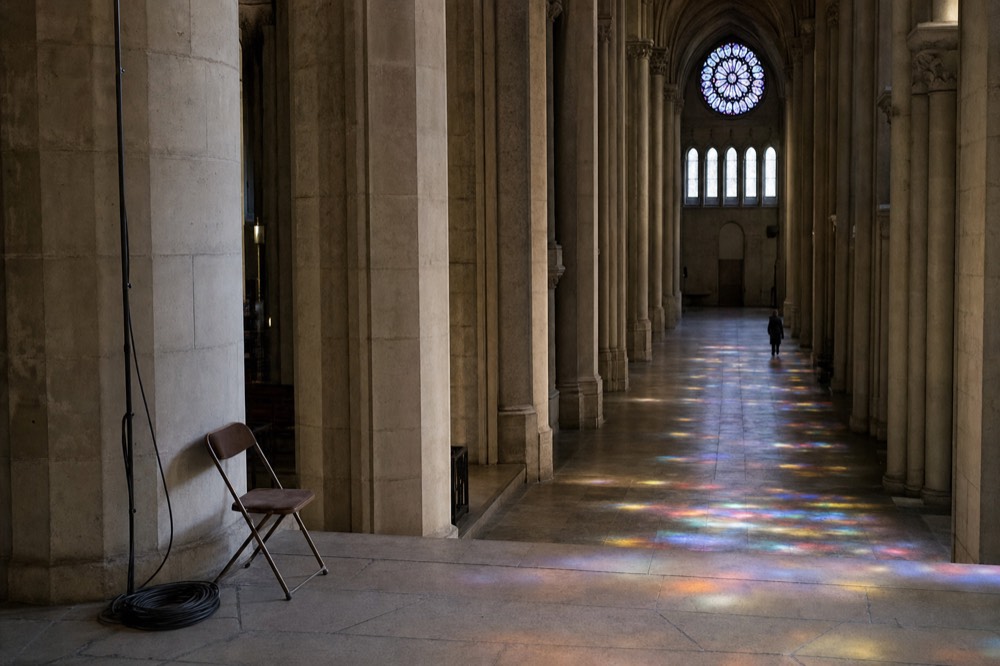
The cathedral now draws more visitors than before the fire, with over 11 million in the first twelve months, and the diocese has reduced the intake rate to protect the atmosphere. The free entry policy, the reservation system and the new headset rule are all part of a deliberate effort to balance pilgrimage, tourism and worship.
What Else Should You Know Before You Go?
Notre-Dame is a working church, not a museum, and visitors are expected to dress modestly and remain silent during services. The free organ recital on Sunday afternoons is a highlight, and the surrounding streets offer some of the best free viewpoints of the flying buttresses and the Seine.
The cathedral requests that visitors cover their shoulders and knees, and that they do not take flash photographs inside. Services are held multiple times a day, and anyone is welcome to attend. The Sunday 16:00 organ recital is free and open to all, and it is one of the few chances to hear the restored great organ, which has 8,000 pipes and dates back to the 18th century.
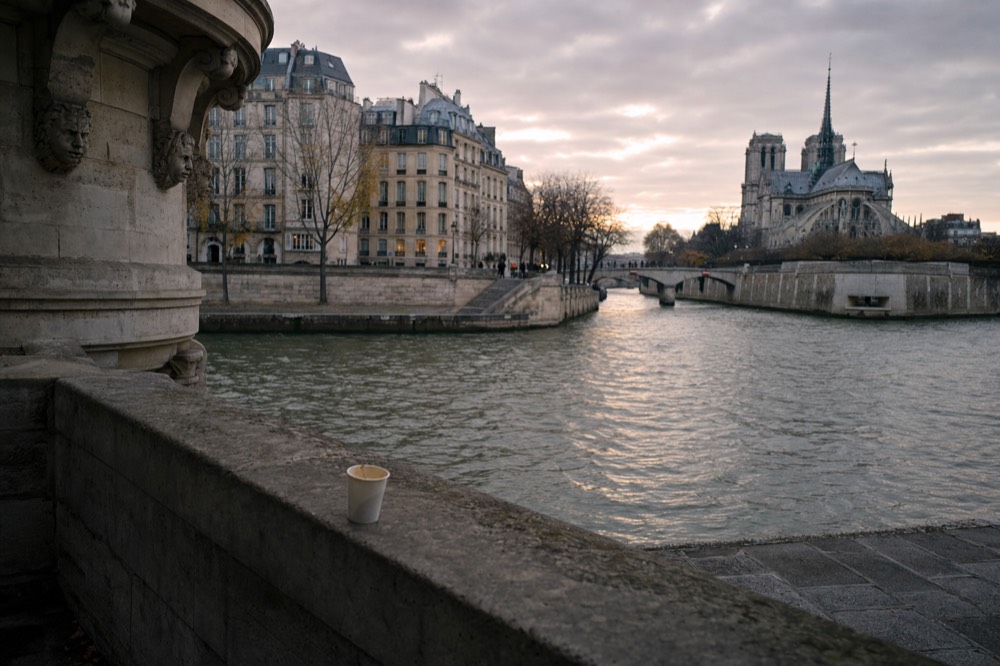
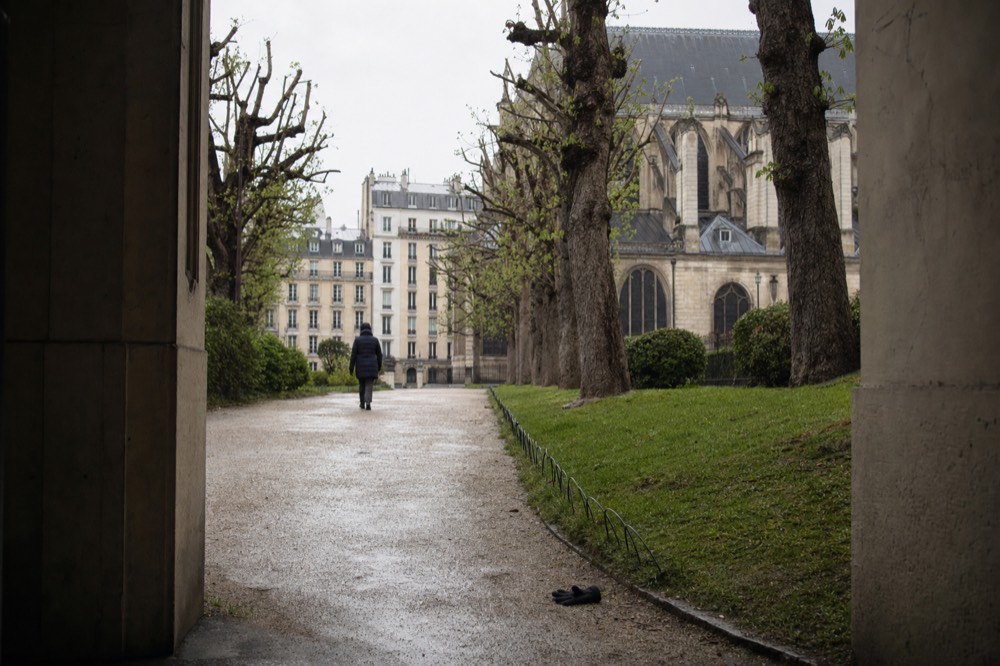
The best free viewpoints of the exterior are from the Square Jean XXIII behind the cathedral, the Pont de la Tournelle and the Quai de Montebello. The Square Jean XXIII is a small garden with a view of the flying buttresses and the spire, and it is open during park hours. The Institut du Monde Arabe rooftop terrace, a short walk across the river, offers a free panoramic view of the apse and the Right Bank, open Tuesday to Sunday 10:00 to 18:00 (see Which Company Offers The Best Free Walking Tours In Paris?).
The archaeological crypt, when it reopens, contains the remains of the Roman quay, the medieval foundations and the 19th-century sewer, and it is a fascinating complement to a free walking tour that covers the island’s history. For now, the Celtic-to-Roman Walk is the next best thing, as it covers the same layers of history above ground.
For more free ways to explore the city, see our guide to Free Things To Do In Paris and our roundup of the best free walking tours in Paris. If you are interested in other free monuments, our free museums in Paris guide covers the permanent collections that cost nothing every day.
Common Questions About Touring Notre-Dame
Is Notre-Dame really free to enter?
Yes, entry is completely free for everyone, every day. The cathedral’s own site warns that any paid ticket is a scam, and the official reservation is free and optional.
Do I need a reservation to visit Notre-Dame?
No, a reservation is not mandatory. It is a free, optional timed slot that reduces waiting time, and it can only be booked a day or two ahead on the official site.
Can I take a guided tour inside Notre-Dame?
Only licensed guides with a booked slot and cathedral headsets may guide inside, as of 1 July 2026. The free CASA volunteer tours are the only free interior option, and they depart from the Rue du Cloître Notre-Dame.
What are the towers and how much do they cost?
The towers are a separate paid attraction run by the Centre des monuments nationaux, costing 16 EUR per person. They require advance booking, and the climb is 424 steps with no lift.
What is the best free walking tour that includes Notre-Dame?
The 1-Hour Celtic-to-Roman Walk and the Walkative! Centre Walk are two excellent free tours that cover the cathedral’s exterior and history. Both are listed on GuruWalk and run in English.
Is the archaeological crypt open?
The crypt has been closed since 28 June 2026 for preventive conservation and is not expected to reopen before the end of the year. When open, it costs 11 EUR full price.