What Is The Cheapest Month To Visit Paris?
No official source names a single cheapest month for Paris. Here is what actually moves the price month by month, and which months hand you the most free things to do.
 By Julien Moreau, Paris Free Experiences Specialist and Local City Guide
Travel content loves to declare that February or November is the cheapest month for Paris. No official source names a cheapest month: not INSEE, not the City of Paris, not the regional tourism body, not the hotel data providers. Any month you see named as "the cheapest" comes from a blog, not from dated official data. Anyone who prints one is recycling an old assumption, not reporting a fact.
What we can do is better. The cost of a Paris trip is not one number, it is three: where you sleep, what the city adds on top, and what you do once you are there. Each of those moves differently through the year, and each has real 2026 figures behind it. This page walks through all three, then gives you a month-by-month calendar of what is free, so you can pick the month that is cheapest for the trip you actually want.
What Is The Cheapest Month To Visit Paris?
No dated 2026 primary source names a cheapest month for Paris, and any article that prints one is guessing. What the record does show is that trip cost moves on three separate levers: accommodation, which is inflating faster than almost anything else, the per-night tourist tax, and the free-event calendar, which varies more by month than hotel prices verifiably do.
The third lever is the one most budget pages ignore, and it is the one this whole site exists for. A month with a free Nuit Blanche, a free Fete de la Musique and free museum Sundays can cost less in total than a month with a slightly cheaper hotel room and nothing free to do. Start with the walks, because a free walking tour run by an independent local guide, listed on GuruWalk, costs nothing to book and you pay what you want at the end, in any month of the year.
What Actually Drives The Cost Of A Paris Trip?
Three things move the price of a Paris trip and only one is the month. Accommodation is the big one: INSEE measured accommodation services up 6.3 percent year on year in June 2026 against headline inflation of 1.8 percent, so beds are getting expensive faster than everything else. The second is the per-night tourist tax. The third is activity cost, the lever you control most.
Start with the bed, because it is the line that got expensive. INSEE's June 2026 year-on-year figures show food up 0.9 percent, catering up 1.8 percent and headline inflation at 1.8 percent, but accommodation services up 6.3 percent (checked September 2026). The honest shape of a cheap Paris trip in 2026 is that bread is nearly flat and beds are not. A July 2026 tracker of 1,199 Paris hotels reported a median double room at 192 EUR a night before city tax and breakfast, about 130 EUR at two-star level and 180 EUR at three-star (checked September 2026). The often-quoted average rate of roughly 350 EUR measures a different, luxury-dragged basket.
The second line is the tourist tax, and almost nobody publishes it. From 1 January 2026 every adult pays per night on top of the room rate: 2.60 EUR in a hostel or one-star hotel, 3.25 EUR at two stars, 5.53 EUR at three stars, 8.45 EUR at four, and 5 percent of the pre-tax nightly rate for most unclassified short-term rentals, capped at 15.93 EUR (checked September 2026). That tax is the same in every month, so it does not change which month is cheapest, but it does mean the sticker price of a room is never the full price.
The third line is what you do, and this is where the month genuinely matters. Paris runs a dense calendar of free events, free museum days and free swimming sites that cluster in some months and vanish in others. The rest of this page maps that calendar against the accommodation picture, so you can see the trade-off plainly rather than being handed a single invented winner.
Which Months Have The Most Free Events?
June and September are the richest free-event months in Paris. June carries Nuit Blanche, which moved to June in 2025 and 2026 after years of being mislisted as October, plus the Fete de la Musique on 21 June with free concerts nationwide. September carries the Journees europeennes du patrimoine, when the Arc de Triomphe opens free until 23:00. Winter months compensate with free first-Sunday schemes that only run November to March.
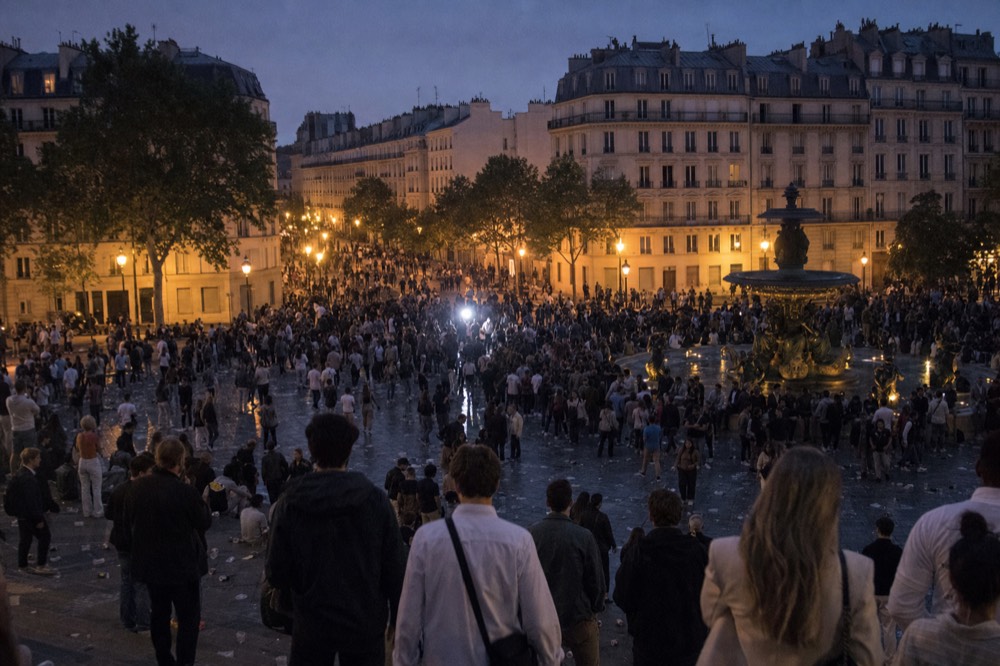
The Nuit Blanche correction matters because a lot of older advice still sends people to Paris in October for it. The 2026 edition, the 25th, ran on the night of Saturday 6 to Sunday 7 June 2026, free and mostly without booking, with a walking route from the Hotel de Ville into the Marais and associated venues across the city. The 2025 edition was also in June. If a free all-night art festival is part of your reason to travel, the month is June, not October.
June also holds the Fete de la Musique on 21 June, when concerts across the country must be free to the public under the national rule. One caution from the 2026 record: transport that night runs on a special 4.30 EUR pass, not free (checked September 2026), and the prefecture banned undeclared gatherings on the central Seine quais. The free thing is the music, not the metro ride home.
September is the other standout. The 43rd Journees europeennes du patrimoine fall on Saturday 19 and Sunday 20 September 2026, free across thousands of sites. The Arc de Triomphe is free those two days from 10:00 to 23:00, walk-up with no booking (checked September 2026) (see How Much Does A Weekend In Paris Cost?). The Pantheon is free the same weekend. The star indoor sites, like the Elysee palace, need timed booking and sell out within minutes of slots opening. Paris Design Week runs 10 to 19 September 2026 with most of the city trail free, and the Techno Parade returned on 19 September 2026 after two skipped years.
Winter has a different compensation. The national monuments, including Sainte-Chapelle, the Pantheon, the Arc de Triomphe and the Notre-Dame towers, run free first Sundays in January, February, March, November and December only (checked September 2026) (see Can You Still Visit Notre-Dame In Paris?). The Musee Rodin's free first Sunday runs October to March. The Louvre's free evening is the first Friday of the month after 18:00, except July and August. If your mental model of free Paris is first Sundays, that is a winter model, and it is worth planning around. Our free events and concerts in Paris guide carries the full calendar.
What Does Accommodation Cost Through The Year?
No official body publishes a month-by-month Paris hotel price table, so no month can honestly be declared cheapest on lodging. What the dated record shows is pressure, not a trough: Paris hotel occupancy hit 78 percent for full-year 2025, a ten-year high, with an average rate close to 350 EUR, and INSEE measured 83.3 percent occupancy in May 2026. The post-Olympics cheap-hotel window never arrived.
That is the single most useful thing to understand about the accommodation question. The claim "Paris got cheaper after the Olympics" is wrong on lodging: hotel occupancy hit a ten-year high in 2025, and beds cost more, not less. Occupancy in 2025 was the highest in a decade, and the accommodation component of inflation is running more than three times the headline rate (checked September 2026). High occupancy with rising rates means fewer empty rooms to discount, in every month.
What you can do with this is tactical rather than calendrical. The median double at 192 EUR against an average near 350 EUR tells you the money is in avoiding the luxury-dragged baskets, not in picking a magic month. Short-term rentals averaged 226 USD a night with 71 percent occupancy in the September 2026 data (checked September 2026), so they are not a systematic escape either. Booking early, staying in the outer arrondissements and travelling on shoulder weekdays moves the price more than shifting your month by thirty days typically does.
There is one honest seasonal pattern the data does support: summer is the pressure peak. Paris Plages and the Seine bathing sites run July and August, the fireworks and Bastille Day crowds fill mid-July, and the Louvre suspends even its free Friday evenings in July and August. August is the month Parisians traditionally leave the city, which thins some neighbourhoods, but INSEE's occupancy figures show the hotels stay full of visitors replacing them. If you want the detailed spending arithmetic, our Paris on a budget guide works through it line by line.
How Do Transport And Food Costs Change By Season?
Transport and food barely move by month in Paris, which is why they cannot make a month cheap. A metro ticket costs 2.55 EUR in January and 2.55 EUR in December (checked September 2026). The real seasonal differences are one-off passes and free windows: transport was entirely free from 17:00 on 31 December 2025 to 12:00 on 1 January 2026, and the Fete de la Musique pass is 4.30 EUR.
The flat-fare point deserves a sentence, because fare confusion is expensive. A single metro-train-RER journey is 2.55 EUR, a bus-tram journey 2.05 EUR, and they are two separate products that do not transfer between each other (checked September 2026). A Navigo day pass is 12.30 EUR, airports excluded. None of these prices change with the season, so a "cheap month" strategy built on transport is a strategy built on nothing. The one seasonal exception worth knowing is the New Year's Eve free-travel window, which IDFM ran for 31 December 2025 into 1 January 2026, airport zones excepted; the equivalent for 31 December 2026 had not been published as of September 2026, so treat it as a recent precedent, not a promise.
Food is the same story. INSEE's June 2026 split shows catering up 1.8 percent and food up 0.9 percent year on year, with bread and cereals essentially flat at 0.1 percent (checked September 2026). A 2026 survey put the Paris baguette tradition at 1.32 EUR on average, and a supermarket classic baguette at 0.45 EUR (checked September 2026). The picnic strategy costs the same in every month, and the free tap water behind it is a legal right in table-service restaurants year round.
The genuinely seasonal costs are the ones to plan around. The three Seine bathing sites ran 4 July to 30 August 2026, free with no reservation, and took 120,000 swimmers in eight weeks. The Fete des Vendanges de Montmartre runs 7 to 11 October 2026, free. Christmas markets are free to enter with paid activities inside. None of these change your hotel bill, but they change how much you spend on entertainment, which for many travellers is the second-biggest line after the bed.
What Does A Month-By-Month Free Paris Calendar Look Like?
Here is what the dated 2026 record shows is free in each month, so you can weigh the calendar against the accommodation picture yourself. Winter months carry the free first-Sunday museum schemes and the lowest event density. June and September carry the biggest free festivals. July and August carry free swimming and Paris Plages but also the highest crowd pressure and no Louvre free evening. No month wins every category.
| Month | Free highlights from the 2026 record | Crowd and cost notes |
|---|---|---|
| January | National monuments free first Sunday; Louvre free first Friday evening | Fireworks-free, quietest museum queues; the 14 July free Louvre day did not exist this year |
| February | Free first Sundays continue; Rodin free Sunday in season | Chinese New Year parade on the Champs-Elysees, free, from 14:30 |
| March | Free first Sundays; Foire du Trone opens 27 March, free entry | Fountains start returning to service through spring |
| April | Marathon de Paris, free to watch | The Louvre's free first-Friday evening runs as normal in April; booking is required |
| May | Nuit des Musees, free; Printemps des Cimetieres, free | No Louvre free Friday occurred in May 2026 because 1 May closed the museum |
| June | Nuit Blanche 6 June; Fete de la Musique 21 June; Rendez-vous aux Jardins | Velib was free the night of Nuit Blanche; the metro was not |
| July | Paris Plages and free Seine bathing from 4 July; Bastille Day parade free to watch | Louvre free evening suspended; fireworks moved to 13 July in 2026; firemen's balls cancelled for heat risk |
| August | Seine bathing and Paris Plages to 30 August | No Louvre free Friday; heatwave late-opening parks ran in 2026 |
| September | Journees du Patrimoine 19 and 20 September; Techno Parade; Paris Design Week | Louvre free Friday returns 4 September; Elysee booking sells out in minutes |
| October | Fete des Vendanges de Montmartre 7 to 11 October; Rodin free Sunday returns; Parc Floral free from 1 October | Louvre free Friday 2 October |
| November | Free first Sundays resume for the winter run; Christmas lights begin mid-month | Louvre free Friday 6 November; fountains start wintering |
| December | Feeries d'Auteuil market 5 to 13 December, free; Louvre free Friday 4 December | New Year free transport ran the previous year but was unpublished for the coming one |
Two cautions on reading that table. First, the Louvre free-Friday dates come from the confirmed rule, first Friday after 18:00 except July and August, and the museum's own calendar should be checked before you plan a trip around one. Second, several rows describe what happened in 2026 specifically: the fireworks date moved to 13 July for the Nice anniversary, and the firemen's balls were cancelled for heat risk. Annual guarantees they are not.
The Latin Quarter is a good example of how little the month matters for the free layer. A walk like the Majestic Latin Quarter, a free walking tour run by an independent local guide and listed on GuruWalk, rated 4.95 across 395 reviews (checked September 2026), runs 2 hours in English from Fontaine Saint-Michel, and it costs the same pay-what-you-want nothing in January as in July.
So Which Month Should You Pick?
Pick the month that matches what you want for free, then work the accommodation tactics, because the dated record supports no single cheapest month. Choose November to March if your priority is the cheapest possible bed plus the winter free-Sunday museum schemes. Choose June or September for the big free festivals. Avoid mid-July if crowds matter more to you than free swimming, and treat any article naming one cheapest month as unsourced.
The Eiffel Tower neighbourhood shows how this works in practice. The tower's gardens and esplanade are free without a ticket, entered after security, in every month of the year. The Eiffel Monuments, 14 Stops walk, a free walking tour run by an independent local guide and listed on GuruWalk, rated 4.9 across 29 reviews (checked September 2026), runs 1 hour 45 minutes in English from near the Arc de Triomphe, and the price is the same in February as in August: nothing to book, pay what you want at the end.
That is the honest conclusion. The cheapest month for a traveller who wants museum Sundays is a winter month. The cheapest month for a traveller who wants a festival every weekend is June or September. The cheapest month for a traveller who will swim in the Seine is July or August, by definition, because the bathing sites do not exist outside that window. The question has a conditional answer, and a page that pretends otherwise is guessing at your priorities for you.
For the practical layers that do not change by month, the transport arithmetic is worked through in the cheapest way to get around Paris, and the wider free-activities directory on Free Things To Do In Paris is updated against official sources year round.
The questions below are the ones travellers actually ask about timing a budget trip to Paris, answered from the dated 2026 record rather than from recycled assumptions. Where no official figure exists, the answer says so plainly instead of inventing a ranking that no source supports.
Common Questions About The Cheapest Time To Visit Paris
What is the cheapest month to visit Paris?
No official 2026 source names one, and the honest answer is conditional. Winter months, November to March, generally offer the cheapest beds and carry the free first-Sunday museum schemes at the national monuments. June and September carry the biggest free events, Nuit Blanche and the Journees du Patrimoine, but sit in a busier hotel market. Pick based on which free layer you want.
Is Paris cheaper in winter?
On accommodation pressure, winter is the best bet, because summer is the documented peak with Paris Plages, the fireworks and the Seine bathing sites drawing crowds. But no official body publishes a month-by-month price table, so "cheaper" is a pressure judgement, not a quoted figure. The tourist tax and transport fares are identical in every month.
Did Paris get cheaper after the Olympics?
No, not on lodging. Hotel occupancy for full-year 2025 was a ten-year high at 78 percent, and INSEE measured accommodation services up 6.3 percent year on year in June 2026. Food and catering rose far less, so a cheap trip is built on picnics and free activities, not on a cheaper bed.
Which month has the most free things to do in Paris?
June and September. June holds Nuit Blanche and the Fete de la Musique, both free. September holds the Journees europeennes du patrimoine, with the Arc de Triomphe free until 23:00, plus Paris Design Week and the Techno Parade. Winter months compensate with free first-Sunday entry at the national monuments from November to March.
Is the Louvre free in some months?
The Louvre's free evening runs on the first Friday of the month after 18:00, except in July and August, and booking for it is mandatory on the museum's own nocturne page. There is no free Sunday at the Louvre in any month, a rule the official Paris tourist board states in as many words. Under-18s and EEA residents aged 18 to 25 get in free every opening day.
Do transport costs change by season in Paris?
Barely. A metro ticket is 2.55 EUR year round and a Navigo day pass is 12.30 EUR, airports excluded. The seasonal exceptions are one-off: free travel ran on New Year's Eve 2025 into New Year's Day 2026, and the Fete de la Musique night uses a 4.30 EUR special pass. Pollution-day travel is discounted at 5.10 EUR, not free, and only when the prefecture triggers it.