Paris On A Budget: What A Cheap Day Actually Costs In 2026
Paris got a two-tier Louvre price, a flat 2.55 euro metro ticket and a record hotel year in 2026. The free layer underneath is still enormous, and this guide prices it honestly.
 By Julien Moreau, Paris Free Experiences Specialist and Local City Guide
Short answer
A realistic budget day in Paris in 2026 runs on about 25 to 40 euros per person after lodging: a 2.55 euro metro ticket or none at all on foot, a 1.32 euro tradition baguette, a 1.20 to 1.50 euro counter espresso, free municipal museums, free water fountains and free pay-what-you-want walking tours listed on GuruWalk. The expensive part is the bed, not the day.
Paris did not get cheaper after the Olympics. Hotel occupancy hit a ten-year high in 2025, accommodation services were up 6.3 percent year on year in June 2026 while bread rose just 0.1 percent, and the Louvre moved to a two-tier price of 22 euros for European Economic Area residents against 32 euros for everyone else from 14 January 2026 (checked September 2026). The honest shape of a cheap Paris day is therefore strange but useful: the bed is the expensive line, and almost everything you do between waking up and going to bed can cost very little. This guide prices that day from official sources, names the free layer precisely, and flags the old advice that quietly died: the carnet, the Orlybus, the Roissybus, the first-Sunday Louvre. The site behind it, Free Things To Do In Paris, exists to document exactly that free layer.
What Does A Day In Paris Actually Cost In 2026?
A realistic budget day in Paris costs about 25 to 40 euros per person once lodging is paid. The biggest lever is transport: a central sightseeing day is 8 to 12 km on foot, which costs nothing, while ten metro rides now cost 25.50 euros because the discounted ten-pack was abolished. Food is the second lever: a supermarket baguette runs 0.28 to 0.45 euros against an 18 to 19 euro lunch formule in the central arrondissements.
The arithmetic that makes walking the answer is worth spelling out. A single metro-train-RER ticket costs 2.55 euros, and there is no discounted carnet any more: the cardboard ten-pack ended in September 2023 and the t+ ticket product itself was abolished on 1 January 2025 (checked September 2026). Ten rides therefore cost 25.50 euros, against roughly 17 euros for the old carnet. Ile-de-France Mobilites, the fare authority, publishes the full 2026 tariff on its official tariff page.
The walking distances are shorter than most visitors expect. The Louvre to Notre-Dame is about 1.5 km, or 20 minutes. Notre-Dame to the Latin Quarter is about 500 metres. The Louvre to the Eiffel Tower is the long one, about 3.5 km or 45 to 50 minutes, and a realistic central sightseeing day adds up to 8 to 12 km on foot. One visiting couple in early May 2026 logged 26,094 steps on their first day and skipped the weekly pass entirely, buying eleven individual tickets plus an airport ticket each because their Friday-to-Sunday dates did not fit the Monday-to-Sunday window of the Navigo Semaine.
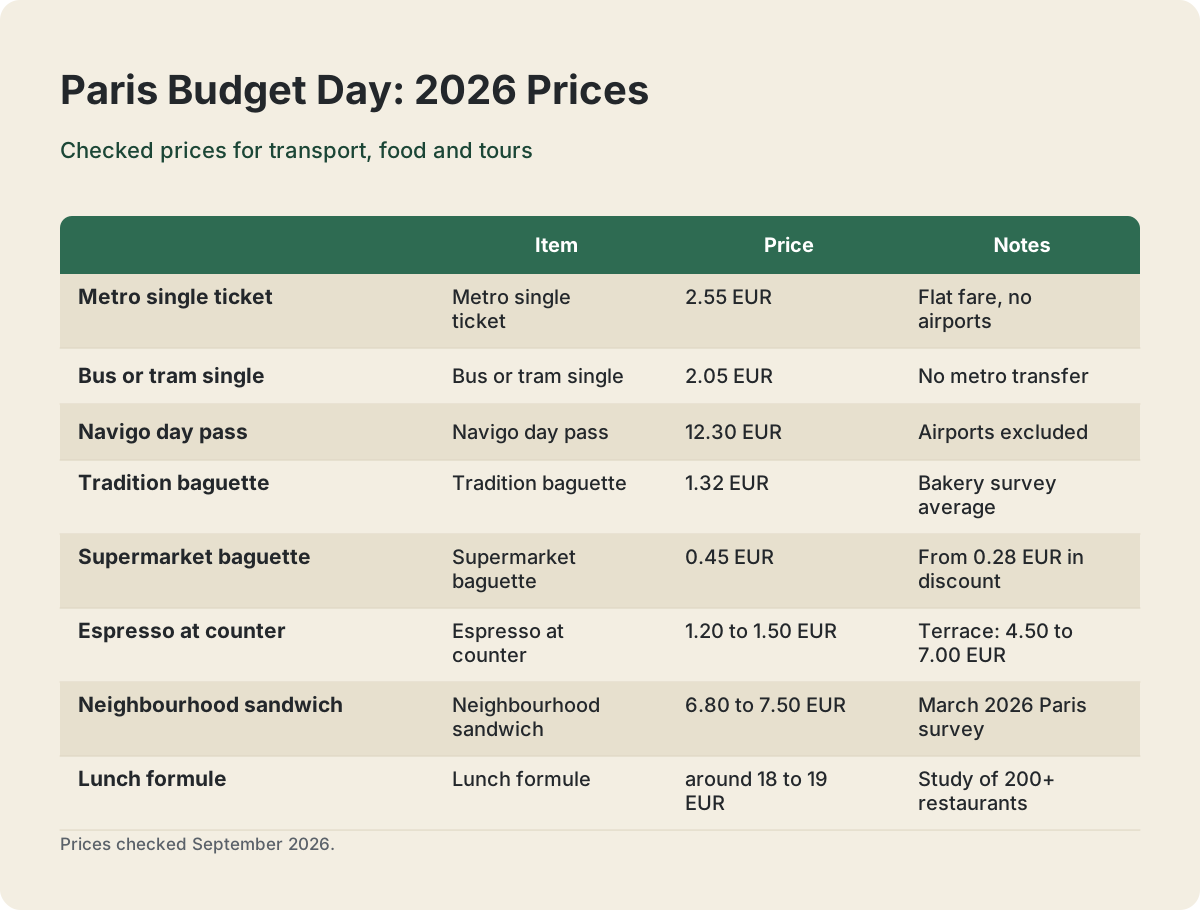
Here is the honest daily snapshot, every figure from an official or primary source:
| Item | Budget price | Notes |
|---|---|---|
| Metro single ticket | 2.55 EUR (checked September 2026) | Flat fare, all zones except airports |
| Bus or tram single | 2.05 EUR (checked September 2026) | Separate product, no metro transfer |
| Navigo day pass | 12.30 EUR (checked September 2026) | Airports excluded |
| Tradition baguette, bakery average | 1.32 EUR (checked September 2026) | Paris survey of thousands of bakeries |
| Supermarket classic baguette | 0.45 EUR, from 0.28 EUR in discount chains (checked September 2026) | Que Choisir survey of nearly 10,000 baguettes |
| Espresso standing at the counter | 1.20 to 1.50 EUR (checked September 2026) | Against 4.50 to 7.00 EUR on a tourist terrace |
| Neighbourhood sandwich | 6.80 to 7.50 EUR (checked September 2026) | March 2026 Paris survey |
| Lunch formule, 9th to 11th | around 18 to 19 EUR (checked September 2026) | Blogger study of 200+ restaurants, not INSEE |
| Free walking tour | 0 EUR to book, tip at the end | Pay what you want, listed on GuruWalk |
One inflation figure frames everything. INSEE's June 2026 year-on-year reading put food up 0.9 percent, bread and cereals up 0.1 percent, catering up 1.8 percent and accommodation services up 6.3 percent (checked September 2026). Bread is almost flat and beds are the thing that got expensive. If your budget is tight, spend your research time on the hotel and your walking time on the free city.
How Do You Get Around Paris Without Spending Much On Transport?
Walk the centre, and buy single tickets only for the legs that genuinely need them. The 2026 fare system is flat: 2.55 euros for metro, RER and train, 2.05 euros for bus and tram, and the two are separate products, so one ticket does not cover both. A Navigo Jour day pass at 12.30 euros only beats single tickets if you take five or more metro rides in one day.
The airport legs are where old advice fails hardest. The Orlybus stopped on 3 March 2025, replaced by metro line 14. The Roissybus from Opera to Charles de Gaulle stopped at the end of February 2026, replaced by RER B or the new 9517 coach from Saint-Denis-Pleyel, which travels on a cheap 2.05 euro bus-tram ticket (checked September 2026). The cheap zoned RER ticket to CDG is also gone: airport stations now need a flat 14 euro airport ticket, and a Navigo Jour does not cover them. Paris Visite at 30.60 euros for one day does include the airports, but that is 2.5 times the price of a Navigo Jour and only makes sense on a day that actually includes an airport run.
Two traps cost real money. First, the physical Navigo Easy card itself costs 2 euros at counters and machines, a hidden first-day cost on top of the fares, and it cannot hold airport tickets at the same time as metro tickets. Second, the anti-pollution day pass is not free: it is a discounted 5.10 euro day pass, sold only when the prefecture triggers traffic restrictions, as it did from 19 to 27 June 2026 during an ozone episode. There is no free transport on bad-air days. The only genuinely free transport window for visitors is New Year's Eve: travel was entirely free from 17:00 on 31 December 2025 to 12:00 on 1 January 2026, though the repeat for the coming New Year has not been published (see What Is There To Do In Paris Around New Year's For Free?). Those small transport costs add up, and the question of whether 1000 dollars covers four days in Paris in 2026 depends on real 2026 prices for beds, transport, food and the free activities that stretch a daily budget (see $1000 In Paris) (checked September 2026).
The cheapest way to see the historic centre is not to ride it at all. The Louvre, Notre-Dame, the Marais, the Latin Quarter and Sainte-Chapelle all sit within a walkable band about 3 km across, and the free layer on top of that geography is the pay-what-you-want walking tour. The Bilingual Centre Walk, 9 Stops is a free walking tour run by an independent local guide and listed on GuruWalk: it runs 2 hours and 15 minutes in English and Spanish, meets at Fontaine Saint Michel, and carries a 4.9 rating across 2,481 reviews on GuruWalk (checked September 2026). It costs nothing to book and you pay the guide what you want at the end.
There are other ways to cover the same ground without paying a fixed price, and the wider directory of free walking tours in Paris breaks them down by neighbourhood. If you would rather plan your own route entirely, a self-guided day-long itinerary costs nothing but shoe leather and pairs well with the transport arithmetic above.
Which Free Walking Tours Give You The Most City Per Euro?
The free walking tours listed on GuruWalk cost nothing to book and you pay the guide what you think the walk was worth at the end, which makes them the single best value on a Paris budget. The strongest centre options are the Bilingual Centre Walk with 4.9 across 2,481 reviews (checked September 2026) and the Walkative! Centre Walk with 4.73 across 2,538 reviews, both about 2 hours 15 minutes and both covering roughly nine central stops.
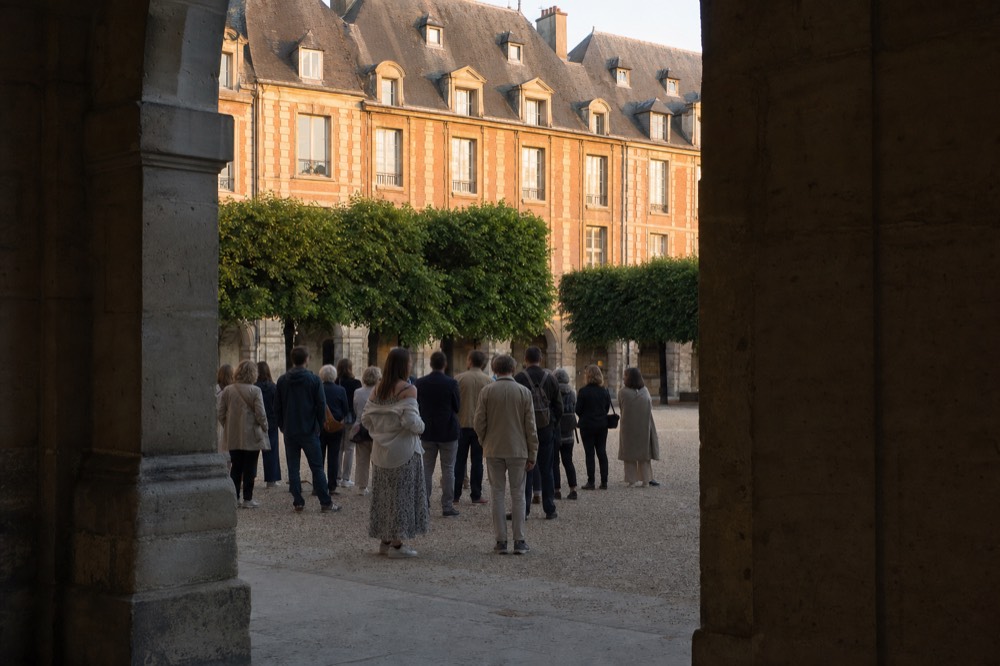
The model deserves one plain explanation, because "free" is doing a lot of work in the name. There is no fixed price and no card taken at booking. At the end, each walker gives the guide what they think the walk was worth. What a fair tip actually is has no single answer, and the honest thing is to report the range: Visit Paris Region, the official regional tourism body, says participants usually leave around 12 euros, GuruWalk's own guide-facing help pages say a good guide earns an average of 10 euros per traveller, and Walkative tells its Paris guests that most give between 10 and 50 euros per person (checked September 2026). Three official sources, three different figures. Budget somewhere in that range and you are covered.
Booking matters more than it used to. Several operators require registration and cancel if fewer than five people sign up, and parties of seven or more are often pushed to a paid product, so a big group should check the walk's own GuruWalk page before assuming the free option applies. Meeting points in the centre collide on purpose: at Fontaine Saint-Michel alone you can find a white umbrella, a yellow umbrella and a red umbrella belonging to different companies, so confirm your walk's exact meeting detail and its start time, which is confirmed when you reserve a place.
For the historic centre specifically, the Walkative! Centre Walk, 9 Stops is the volume leader: 2 hours and 15 minutes in English, meeting at Hotel de Ville, rated 4.73 across 2,538 reviews on GuruWalk (checked September 2026). It is a free walking tour run by an independent local guide, listed on GuruWalk, and it works well as a first-day orientation before you spend anything at all.
If your budget question is really whether the free tour model holds up against a paid one, the evidence-based answer is that the model is still genuinely free at booking, that the tip is the whole price, and that the main 2026 change is operational rather than financial: several operators now require booking and run minimum-group rules. Weigh that against what a paid guided visit costs at the paid monuments, and the free walk wins on value every time for a first visit.
Where Can You Eat And Drink Cheaply Without Missing Out?
Eat bakery food, drink standing, and picnic in the parks, and a food day in Paris can run under 15 euros without feeling deprived. The 2026 Paris baguette tradition averages 1.32 euros in bakeries against 0.45 euros in supermarkets, a counter espresso costs 1.20 to 1.50 euros against 4.50 to 7.00 euros on a tourist terrace, and the Louvre's own bakery sells a jambon-beurre for 7.00 euros.
The coffee spread is the most useful small-cost fact in the city. A 2026 price guide puts an espresso at 1.20 to 1.50 euros standing at the counter, 2.00 to 3.00 euros at a neighbourhood table, and 4.50 to 7.00 euros on a tourist terrace; the Cafe de la Paix summer 2026 terrace menu lists an espresso at 7 euros (checked September 2026). French law requires both the counter and seated tariffs to be on the menu, so look at the prices before you sit. The same law works in your favour on water: restaurants, cafes and bars must give customers free drinking water on request and must say so on the menu or a notice, a duty inserted by the 2020 anti-waste law. Ask for "une carafe d'eau" while you are eating there and it is free, glasses included.
Picnics are expressly allowed in City of Paris parks as long as you leave the place clean, though groups over 30 need authorisation. What is not allowed is alcohol: the City's own parks regulation forbids drinking alcohol in its parks and gardens outside licensed premises. A picnic lunch built from a supermarket classic baguette at 0.28 to 0.45 euros, cheese, and tap water from a public fountain is the cheapest real meal in Paris, and the residents' own benchmark supports it: one 15th-arrondissement resident reported averaging about 3 euros per meal from groceries.
Two stale numbers to stop believing. The "5 euro falafel in the Marais" is dead: an April 2026 guide reports the takeaway Fallafel Special at L'As du Fallafel on Rue des Rosiers at 8.50 euros, with 2 to 3 euros more to sit inside (checked September 2026). The "5 euro kebab" is dead too: kebabs nationally moved from about 5 euros in 2018-19 to 8 to 12 euros. Cheap central food still exists, but its price floor has risen, and any guide quoting the old figures is quoting a Paris that no longer exists.
| Food tactic | 2026 price range | Where the figure comes from |
|---|---|---|
| Baguette tradition, bakery | 1.32 EUR average, top 1.95 EUR (checked September 2026) | 2026 survey of thousands of Paris bakeries |
| Classic baguette, supermarket | 0.45 EUR, discount chains from 0.28 EUR (checked September 2026) | Que Choisir, nearly 10,000 baguettes |
| Croissant | 1.22 EUR average in one compilation, 1.60 to 2.00 EUR in another (checked September 2026) | Two 2026 sources disagree; both recorded |
| Espresso at the counter | 1.20 to 1.50 EUR (checked September 2026) | 2026 price guide |
| Espresso on a palace terrace | 7.00 EUR (checked September 2026) | Cafe de la Paix summer 2026 menu |
| Jambon-beurre inside the Louvre | 7.00 EUR (checked September 2026) | Louvre's own bakery menu, 2025-26 season |
| Sandwich, neighbourhood bakery | 6.80 to 11 EUR (checked September 2026) | March 2026 Paris survey |
| Tap water in a restaurant | Free on request while consuming on the premises | Article L541-15-10, Code de l'environnement |
One caution on the croissant: two 2026 compilations disagree, one putting the Paris average at 1.22 euros and another saying central butter croissants now often run 1.60 to 2.00 euros. The one-euro croissant is no longer the Paris default, and there is no official INSEE average for a cafe cup of coffee either, because that series was discontinued. Anyone quoting an official average cup price is quoting nothing.
What Is Free At The Museums And Monuments In 2026?
Eleven of the fourteen City of Paris museums keep their permanent collections free every opening day, with no booking and no first-Sunday condition, and that is the backbone of a free culture day. At the nationals the rules split: the Louvre has no first-Sunday scheme at all, its all-visitor free window is the first Friday evening of the month, while Orsay, Picasso and others run a real first-Sunday free day with completely different booking rules.
The single most common error on the web is worth killing here: the Louvre is not free on the first Sunday of the month, and has not been for years. Its own admission page lists the real window, free for all visitors on the first Friday of the month after 6 p.m., except in July and August, plus 14 July when that does not fall on a Tuesday, which it did in 2026. The free Friday evening needs a mandatory booking on the museum's own nocturne page, with slots posted only days ahead, and they go fast. The Paris tourist board itself now states plainly that the first-Sunday Louvre is a myth. Under-18s of any nationality and EEA residents aged 18 to 25 get in free every day.
The first-Sunday rule is real elsewhere, and the booking rules are where visitors get caught. Orsay makes a timed free ticket mandatory and refuses walk-ups at capacity; its free Sundays genuinely sell out. Picasso is the opposite: it will not let you book a free ticket at all, you walk to access control with proof. Quai Branly needs a timed ticket. Rodin's free first Sunday only runs from October to March, so a summer Sunday there is full price. The full per-museum detail, with sources, is in free museums in Paris.
Notre-Dame is the easiest free monument in the city: entry is completely free, reservation is optional, free, and only opens hours or a day or two ahead, and any third party selling a cathedral ticket is selling something the cathedral gives away, a scam the cathedral warns about in its own words. The paid parts are separate: the towers at 16 euros, the Treasury at 12 euros. The Eiffel Tower's gardens and esplanade are free after security; going up is not.
| Site | The free route | The catch |
|---|---|---|
| Louvre | First Friday after 18:00, except July and August; under-18s and EEA 18-25 always | Booking mandatory for the free evening, slots posted days ahead |
| Musee d'Orsay | First Sunday of the month, free for all | Timed ticket mandatory, sells out |
| Musee Picasso | First Sunday of the month, free for all | No booking possible, walk to access control with proof |
| Musee Rodin | First Sunday, October to March only | Summer first Sundays are full price |
| City of Paris museums (11 of 14) | Permanent collections free every opening day | Temporary exhibitions inside are ticketed, often 9 to 15 EUR |
| Notre-Dame | Entry free, always, walk-in possible | Towers 16 EUR, Treasury 12 EUR, both separate |
| Eiffel Tower | Gardens and esplanade free | The lift and stairs are paid |
One closure to plan around: the Centre Pompidou shut on 22 September 2025 for renovation until 2030, so any list still calling it a free first-Sunday venue is out of date. And the Maison de Victor Hugo, normally free, is charging for everything from 11 June to 22 November 2026 for its architecture exhibition.
How Do You Stay Watered And Find Toilets For Free?
Paris runs a free water and toilet network that most budget guides underuse: more than 1,200 public drinking fountains with 17 serving free sparkling water, about 1,500 shops that will refill a bottle for free under the Eau de Paris sticker scheme, and 422 free self-cleaning sanisettes across the city, most open 06:00 to 22:00 with 153 open around the clock. Tap water in the city costs 0.0042 euros per litre.
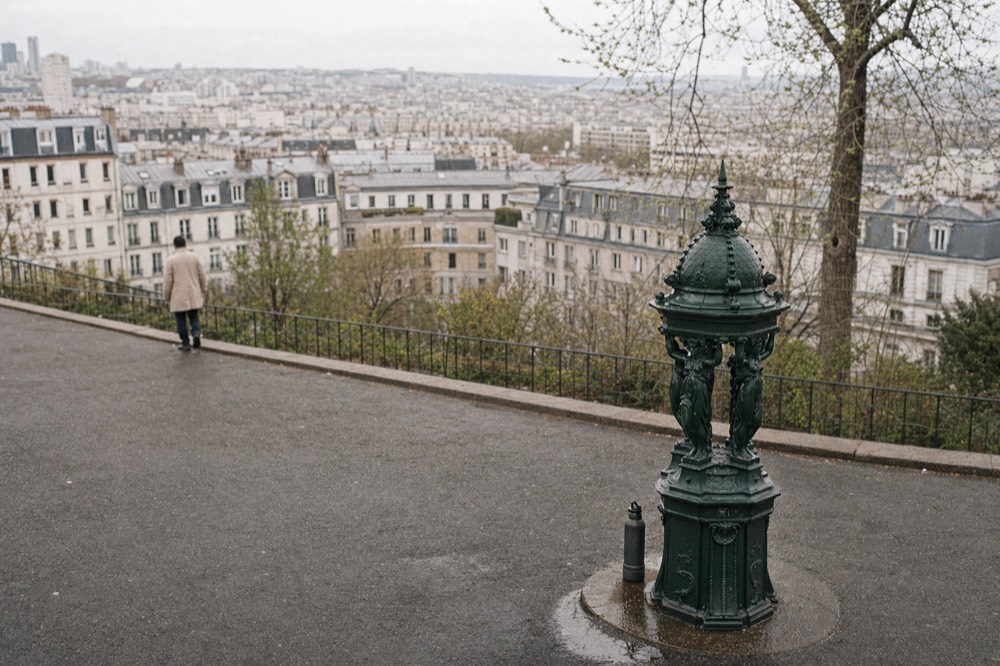
The numbers come from the City's own live open-data file and from Eau de Paris, the public water operator: 1,323 fountain records with 1,238 marked available, 113 of them the dark-green Wallace fountains, and 17 sparkling-water fountains, the newest opened in the 13th arrondissement in March 2026 (checked September 2026). The refill network is the part worth knowing: a shop displaying the "Ici je choisis l'Eau de Paris" sticker will refill your bottle with no purchase required. One honest caution: fountains are wintered from around October or November through to a spring restart set arrondissement by arrondissement, usually in April, though more than 500 stayed running through the 2025-2026 winter.
The sanisette network means you never need to buy a coffee to use a toilet. They have been free since 2006, the new-generation units self-clean for about thirty seconds between uses, and the operator reported 26 million entries in 2025 (checked September 2026). Of the 422 sanisettes, 414 are wheelchair accessible and 8 are not, which is the City's own data and more precise than the "all accessible" line some guides repeat. Department-store toilets are a courtesy, not a service: they are private, and the Forum des Halles charged 0.70 euros in September 2025, so treat them as a bonus rather than a plan.
The tap-water law has one boundary worth knowing. The free carafe applies to a customer consuming on the premises in a table-service restaurant; a passer-by who orders nothing is not entitled to one, and refusal by a restaurant of a seated customer's request can be fined up to 3,000 euros. The law also requires the restaurant to display that you may ask, so the phrase "une carafe d'eau, s'il vous plait" is the single most useful French sentence on a budget trip.
Which Free Views, Parks And Neighbourhood Walks Should You Build The Day Around?
The free viewpoint layer in Paris is genuinely strong: the Galeries Lafayette rooftop terrace is free with no ticket, the Institut du Monde Arabe terrace is free with a view of Notre-Dame's apse, about a quarter of the City's 550-plus parks stay open 24 hours, and the free walking tours listed on GuruWalk cover Montmartre, the Marais and the Latin Quarter in English at no fixed price.
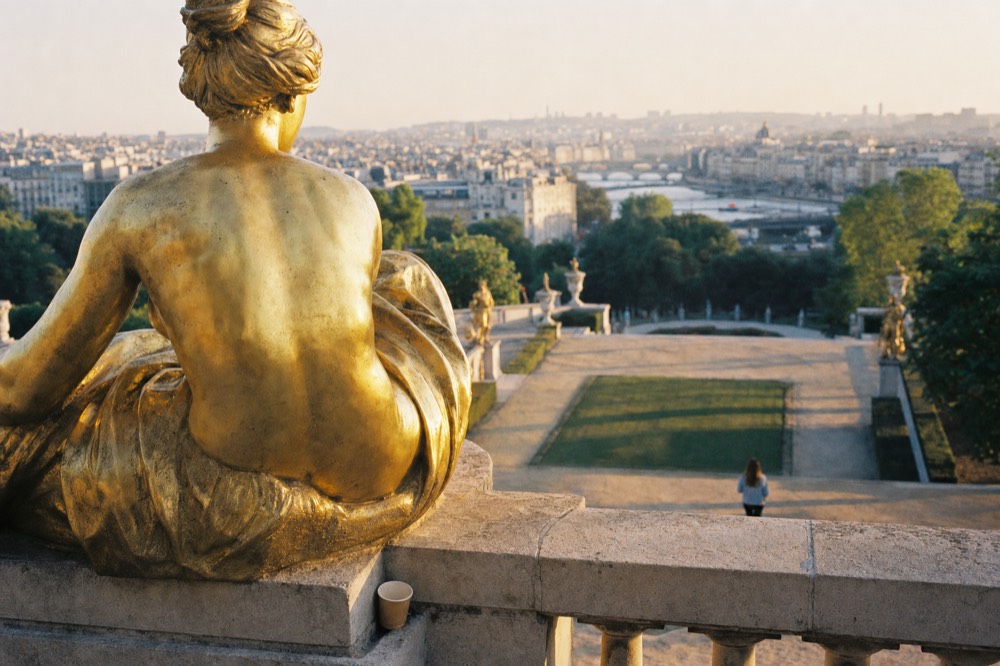
Start with the views, because they anchor the day. The Galeries Lafayette Haussmann rooftop is free during store hours, no ticket and no reservation, with the Opera Garnier and the Eiffel Tower in the frame; the store's own French and English pages disagree on the closing time by thirty minutes, so arrive with margin. The Institut du Monde Arabe terrace is free, Tuesday to Sunday 10:00 to 18:00. Two formerly famous "cheap views" are gone or paid: the Tour Montparnasse observatory closed on 31 March 2026 for a multi-year renovation, and the BHV Marais rooftop is now a paid restaurant, despite still appearing on free-view lists.
For the neighbourhoods themselves, the free walking tour directory covers all three budget-friendly quarters. In Montmartre, the Crowd-Free Montmartre walk runs 18 stops in just 1 hour and 30 minutes, rated 4.82 across 1,389 reviews on GuruWalk, meeting at Blanche (checked September 2026). In the Latin Quarter, the Walkative! Latin Quarter walk covers 7 stops over 2 hours and 15 minutes, rated 4.73 across 352 reviews. Both are free walking tours run by independent local guides and listed on GuruWalk, and neither takes a card at booking. The Every-Side Centre Walk, 7 Stops is the centre option with the highest rating in the roster, 4.96 across 476 reviews, running 2 hours and 30 minutes in English and meeting at Charles de Gaulle-Etoile, which makes it a strong pick if you want the Arc de Triomphe end of the axis covered on foot (checked September 2026).
The parks close out the day. Picnics are allowed, alcohol is not, and the summer late-opening scheme keeps a rotating set of gardens open until midnight, while about a quarter of City-managed parks never close at all. The state-run gardens, the Tuileries, the Luxembourg, the Palais-Royal, do close, so check before planning an evening. The full green-space detail, including which parks charge and which do not, is in free parks and gardens in Paris.
One dated warning for Montmartre specifically: the Mur des Je t'aime, the "I Love You" wall that appears on nearly every free-things list, has been behind barriers since early March 2026 after the structure weakened, so do not build a walking route around it. The basilica itself is free, open every day of the year, and open later than almost any other major Paris interior, 06:30 to 22:30. The funicular up the hill is not free, and the free alternative is the couple of hundred steps beside it.
If the whole picture has you recalculating what a trip costs end to end, the deeper numbers, including the tourist tax that almost nobody publishes, are worked through in cheap things to do in Paris. The transport arithmetic in full, including the passes that no longer exist, is covered in the cheapest way to get around Paris, and the free-museum booking rules are laid out museum by museum in the free-museum-days guide.
A budget Paris day in 2026 rests on four free pillars: the municipal museums, the pay-what-you-want walking tours listed on GuruWalk, the public water and toilet network, and a walkable centre that makes transport optional. The paid lines are the bed, the airport ticket and any monument you choose to enter, and each of those has a documented price you can plan around rather than guess at.
Common Questions About Visiting Paris On A Budget
How much does a day in Paris cost on a budget?
Plan on roughly 25 to 40 euros per person per day after lodging is paid. The big lines are transport, 2.55 euros per metro ride or nothing on foot, and food, where a bakery baguette at 1.32 euros and a counter espresso at 1.20 to 1.50 euros keep the floor low (checked September 2026). Museums, churches, water fountains and the pay-what-you-want walking tours listed on GuruWalk can fill every hour at no fixed cost.
Is Paris expensive to visit in 2026?
The bed is expensive and the day is not. INSEE put accommodation services up 6.3 percent year on year in June 2026 while bread and cereals rose 0.1 percent, and Paris hotel occupancy hit a ten-year high in 2025 (checked September 2026). A hostel night also carries 2.60 euros per adult per night of tourist tax. Once lodging is handled, the free layer, city museums, Notre-Dame, parks, fountains and free walking tours, is one of the strongest in Europe.
What is the cheapest way to get around Paris?
Walking. The central sights sit within a band about 3 km across, and a sightseeing day on foot runs 8 to 12 km. When you do ride, a single metro ticket is 2.55 euros, a bus or tram ticket is 2.05 euros, and they are separate products, so one ticket never covers both. A Navigo Jour at 12.30 euros only pays off at five or more metro rides in a day, and it excludes the airports (checked September 2026).
Do free walking tours really cost nothing?
They cost nothing to book and nothing is charged through checkout. They are tip-supported: at the end each walker gives the guide what they think the walk was worth. Published guidance ranges from about 12 euros from the official regional tourism body to 10 to 50 euros from one operator, so budget within that range rather than assuming zero. The walks are run by independent local guides and listed on GuruWalk.
Can you drink tap water in Paris for free?
Yes. Paris tap water is drinkable and costs 0.0042 euros per litre, the public fountains are free, and shops with the Eau de Paris sticker will refill a bottle with no purchase required. In a restaurant, ask for "une carafe d'eau" while you are eating there and it is free by law; the duty applies to customers consuming on the premises, not to passers-by.
Are museums free in Paris on Sundays?
Some, not all, and never the Louvre. The Louvre's free window is the first Friday evening of the month, except July and August, with mandatory booking. The Musee d'Orsay, the Musee Picasso, the Musee du quai Branly and several others run a real first-Sunday free day, but Orsay requires a timed ticket that sells out and Picasso allows no booking at all. Eleven of the fourteen City of Paris museums are free every single opening day, which is the better rule to build around.