What Is Frowned Upon In Paris?
The real Paris etiquette rules, from the Bonjour greeting and the free carafe of tap water to picnic laws, metro behaviour and tipping, all checked against French law and official sources.
 By Julien Moreau, Paris Free Experiences Specialist and Local City Guide
What Is Frowned Upon In Paris?
The behaviours Parisians genuinely frown on are skipping the greeting, tutoying a stranger, cutting bread instead of breaking it, treating the metro as a place for loud music, and assuming a tip is owed. Two things visitors often worry about are actually fine: asking for a carafe of tap water is a legal right, and picnicking in a Paris park is expressly allowed. The line between rude and illegal is narrower than most guides admit.
Paris etiquette splits into three layers, and most bad advice comes from mixing them up. The first layer is law: rules written into the French Civil Code, transport decrees and municipal park regulations, where breaking them can cost real money. The second layer is official guidance: habits that the French government tourism body or the Paris tourist office actually publishes, like greeting before you speak. The third layer is folklore, the "Parisians are cold" material that circulates without any source at all.
This page deals only with the first two layers, because they are the ones a visitor can act on. Where a claim could not be traced to an official source, that is said plainly rather than papered over. The French government's own etiquette guidance, published on its national tourism site, is surprisingly specific: greet first, address strangers as vous, break bread rather than cut it, and wait to be seated in restaurants. Those four habits cover most of what visitors get wrong.
One more framing note before the detail. The site you are reading, Free Things To Do In Paris, is built around free activities, and etiquette overlaps with them constantly. The free carafe of water, the free picnic spot, the free walk through a landmark square: each has a written rule attached, and knowing the rule is what keeps the free thing pleasant for everyone.
Why Does Saying Bonjour Matter So Much In Paris?
Greeting before speaking is the single habit locals notice most, and the French government says so explicitly. Enter a shop, a restaurant or a bakery and say Bonjour before anything else. Skip it and staff will read the omission as rudeness, not shyness. Use vous with strangers, never tu, and say au revoir when you leave. None of this is law, but it is published official guidance, and it changes how you are treated everywhere.
The French national tourism site frames it directly: the French place great value on politeness, so always greet first on entering a shop or restaurant or before addressing someone, and a simple Bonjour is enough. Salut is for friends. The same source is equally firm on the vous and tu distinction: address anyone you do not know as vous, because only friends use tu with each other. A visitor who gets these two things right can make every other mistake on this page and still be welcomed.
The habit extends to transactions. Say bonjour to the shopkeeper before browsing in a small shop, and au revoir, bonne journee on the way out. This can feel theatrical to visitors from countries where retail interaction is minimal, but in Paris it is the baseline, not a flourish. In a bakery at 08:00 you will hear the full exchange, merci, bonne journee, bonne journee a vous, several times over, often before anyone mentions bread.
There is a practical corollary for anyone joining a free walking tour. These walks are run by independent local guides and listed on GuruWalk, and they are free with pay what you want at the end: there is no fixed price, and each walker gives the guide what they think the walk was worth. The greeting rule applies to your guide too. A bonjour at the meeting point, and your name when asked, is the local norm, and parties who arrive talking on phones tend to get a cooler reception than the same people would at a hotel desk.
The same social logic explains the phone-at-the-table norm. The Paris tourist office does not ban phones at meals, but it does advise discretion, noting that Parisians often answer calls briefly or send messages during meals, and that staying discreet respects both the people around you and the atmosphere of the place. A loud video call on a cafe terrace fails that test even though no law touches it.
For visitors who want the etiquette and the city explained at once, three free walks fit this cluster well: a hidden-gems walk from the Hotel de Ville, a long every-side centre walk, and a bilingual nine-stop centre walk.
Is A Carafe Of Tap Water Really Free In Paris?
Yes, and it is a legal right, not a favour. Article L541-15-10 of the French Environmental Code obliges restaurants, cafes and bars to tell customers they may ask for free drinking water, cool or at room temperature, and to give it to any customer consuming on the premises. Refusal can be fined up to 3,000 EUR for an individual and 15,000 EUR for a company. The rule comes from the 2020 anti-waste law.
The precise wording matters, because the popular version of this claim is slightly wrong. The law does not say water must be offered unprompted. It says establishments must display, on the menu or a notice, that customers may ask, and must then provide fresh or room-temperature drinking water, with glasses, to anyone consuming on the premises. The condition is the consuming part. A passer-by who orders nothing is not covered, and a cafe may charge for a glass if you are not having a meal and it posts a price. The French consumer protection body states the rule in exactly these terms.
So the safe, correct phrasing to use in a restaurant is simply une carafe d'eau, please. It is free, it is normal, and locals order it constantly. What is frowned upon is not asking, it is the visitors who assume the request will be refused and buy a 6 EUR bottle instead, then complain about Paris prices.
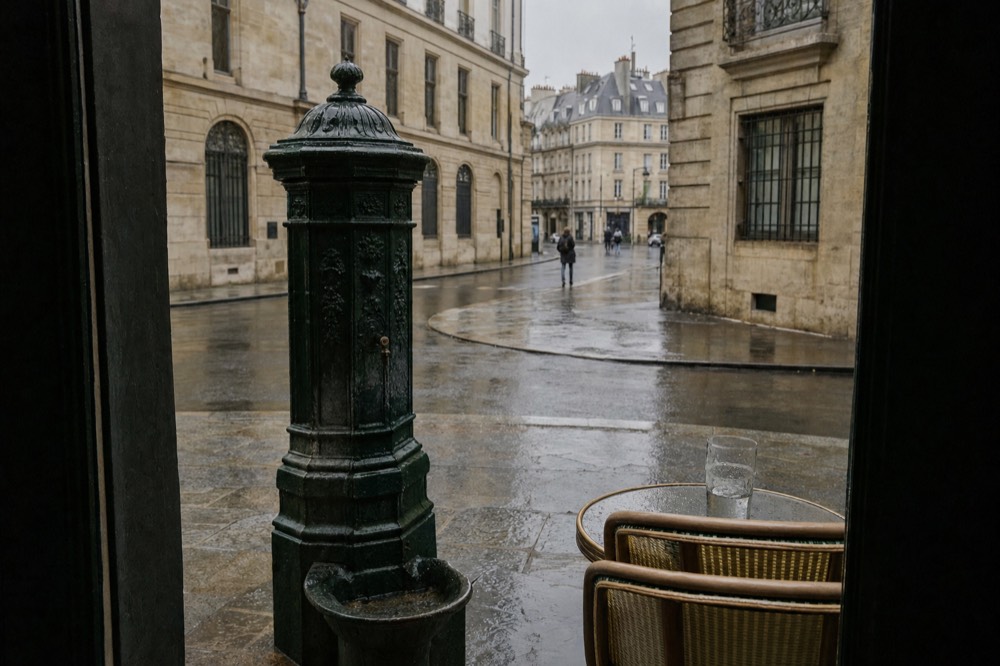
The same table-service rule explains a second, quieter norm. Water arrives in a carafe, unrefrigerated, and that is intentional. Asking for ice, or expecting chilled water without paying for a bottle, marks you out faster than any accent. Bread sits beside the plate, not on it, and is broken by hand rather than cut, according to the French government's own etiquette guide.
| What you can expect free with a table-service meal | The rule behind it | What is not included |
|---|---|---|
| A carafe of tap water, cool or room temperature, with glasses | Environmental Code article L541-15-10, on request, while consuming on the premises | Bottled or sparkling water, which is charged |
| Bread | Standard table-service practice in France | Takeaway, picnic quantities |
| Cutlery, cover and table setting | Included in the displayed price | Nothing extra is owed for these |
| Service, when the menu says prix service compris | 1987 order requiring the wording and the rate on displayed documents | A tip is voluntary, never owed |
One caution on the last row. Not every cafe charges service, and those that do must say so on the menu. If the menu is silent, service is not included, and the voluntary rounding-up norm applies instead.
If all this table etiquette makes you want a guide who can also steer you through the city's quieter corners, the hidden-gems walk from the Hotel de Ville is a good fit, and reserving a place costs nothing until you decide what the walk was worth at the end (see Free Paris For Students: What Costs Nothing On A Student Budget).
Can You Picnic And Drink Wine In A Paris Park?
Picnicking in a Paris park is expressly allowed, as long as you leave the place clean, and groups over 30 need authorisation. Drinking alcohol in those same parks is forbidden by the City's own regulation, except inside licensed premises or at licensed events. Barbecues and any fire are banned outright. On the street, drinking is not banned city-wide, but a police order renewed each year prohibits it in named streets.
The City of Paris parks regulation is unambiguous on the first point: picnics are allowed on condition the cleanliness of the place is respected. The Luxembourg gardens, the Champ de Mars, the Buttes-Chaumont lawns and the Place des Vosges in the Marais are all legitimate lunch spots, and locals use them exactly that way in summer. What is frowned upon is the aftermath: bones, wrappers and especially glass left on the grass. City gardeners and fellow picnickers judge hard on this one.
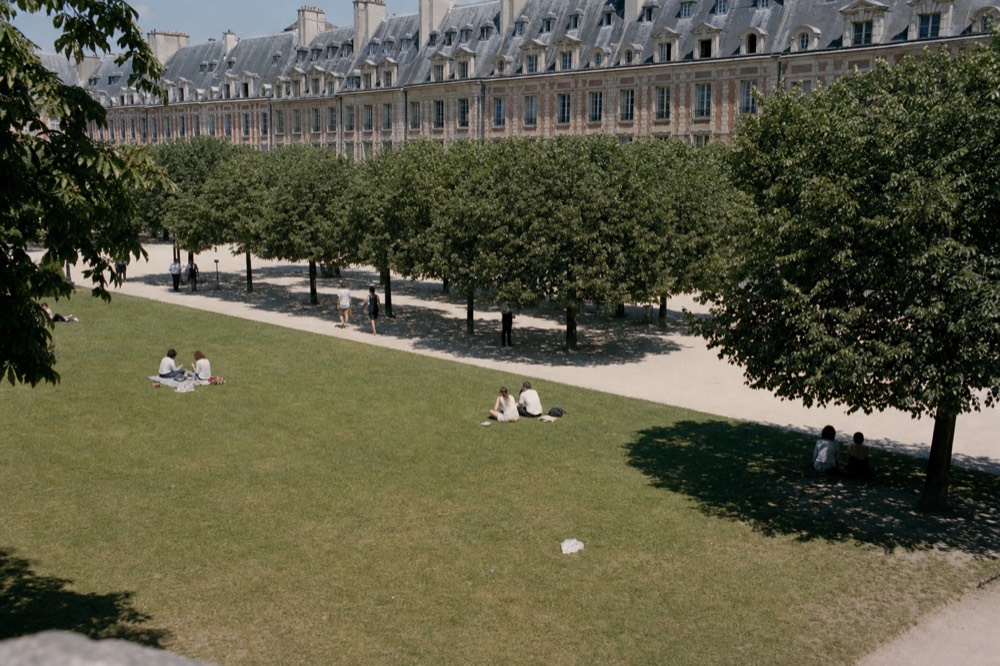
The wine question is where visitors go wrong. The same municipal regulation forbids consuming alcoholic drinks in the City's parks, gardens and green spaces, except inside licensed premises there and at events granted an alcohol licence. Enforcement is famously uneven, and plenty of picnics involve a discreet glass without consequence. But the rule exists, it is written, and a loud group with bottles on a lawn is the version that gets moved on. The honest advice is to know the rule before deciding how discreet to be.
The Marais illustrates the etiquette of free space better than any other district. Place des Vosges is the oldest planned square in Paris, free to enter, and a favourite picnic and people-watching spot, which makes it exactly where picnic manners are most visible to residents. The surrounding streets reward slower walking, and a hidden-gems walk of the sort listed on GuruWalk, free with pay what you want at the end, covers the quarter's courtyards and passages that a rushed visitor walks straight past. The Time Machine Hidden-Gems Walk is one such option, an hour and 45 minutes starting from the square in front of the Hotel de Ville.
On the street, the picture is different again. There is no city-wide ban on drinking in public. What exists is a police prefecture order, renewed annually, that prohibits consuming stronger alcoholic drinks on the public highway in named streets, and one-off orders covering the Seine lower quays and canal quays around major events. Breaching one of these orders is a fourth-class offence under the Penal Code. The practical version: a can on a bench is generally tolerated, a bottle on the quais during a festival weekend is not, and the perimeter rules tighten on event days.
What Are The Real Rules Of Behaviour On The Paris Metro?
Eating on the Paris metro is not forbidden, despite the legend. The national transport decree lists sixteen prohibitions and food is not one of them. What is actually banned: playing music out loud, making noise that disturbs others, spitting, boarding while visibly drunk, and damaging or soiling vehicles. Folding seats are meant to stay folded when the carriage fills. None of the food rules exist, and several of the noise ones carry fines.
The decree, number 2016-541 of 3 May 2016, is the reference text, and reading it settles a long-running argument. Visitors arrive convinced that eating a sandwich on line 4 will draw a fine. It will not. What draws official attention is the loudspeaker phone call, the portable speaker, and the group shouting across the carriage, all of which fall under the ban on disturbing others' tranquillity with noise. The visibly drunk rule is also explicit: anyone in a manifest state of intoxication may not enter or stay on the network.
| Claimed metro rule | What the decree actually says | Status |
|---|---|---|
| Eating is banned on the metro | Article 5 lists sixteen prohibitions, none covering food | Myth |
| Drinking any liquid is banned | Not listed | Myth |
| Playing music out loud | Forbidden without authorisation | Real rule |
| Disturbing others with noise | Forbidden | Real rule |
| Boarding visibly drunk | Forbidden to enter or stay on the network | Real rule |
| Spitting, urinating outside facilities, soiling vehicles | Forbidden | Real rule |
The folding-seat norm is softer but real, and the French tourism site publishes it: the strapontin seats near the doors are meant to stay folded when the carriage is busy. Sitting on one at rush hour while standees crowd the aisle is the kind of thing that earns a stare rather than a fine, and the stare is the point of this article.
A few practical habits round out the metro etiquette. Take your ticket out before you reach the gates, so you are not opening your wallet in a crowd, which is pickpocket advice from the Paris police prefecture as much as etiquette (see Free Concerts And Events In Paris: A Year Of Live Music Without A Ticket). Do not let anyone tailgate through the gate behind you, for the same reason. And on escalators, the local convention of standing on the right is genuine practice even though no official body publishes it as a rule, so treat it as custom, not law.
Is Tipping Expected In Paris Restaurants?
No, and the law explains why. A 1987 order requires establishments that charge service to print prix service compris on the menu with the rate applied, and menu prices then include both tax and that service. Nothing more is legally owed. A small extra for good service is normal and voluntary, and the Paris tourist office says exactly that. Tipping out of obligation, the way a visitor might at home, misreads the system.
The legal chain is short. The order of 27 March 1987 states that where a service charge is levied, the displayed price is understood as tax and service included, and that displayed documents must carry the wording with the percentage in brackets. The French consumer protection body restates this for the public. The Paris tourist office adds the practical layer: the service charge is already in the bill, so there is no obligation to leave a tip, only do it if you are satisfied. The national tourism site quantifies the custom: service runs around 15 percent of the total, and leaving another 2 to 3 percent for particularly good service is the norm.
So the behaviour that is frowned upon is not failing to tip, it is the opposite misunderstanding: leaving 20 percent out of habit, or asking a waiter whether service is included in a tone that implies suspicion. The bill already answers the question if the menu said service compris. Rounding up a few euros, or leaving the small change, is the local gesture, and it is genuinely optional.
The free-walking-tour economy runs on a different model, and it deserves its own honest paragraph. These walks are free to book and pay what you want at the end, and there is no published norm for the amount. Operators' own guidance ranges widely, from around 12 EUR suggested by the official regional tourism body to 10 to 50 EUR printed by one operator, and there is no median figure anyone can honestly cite. If you want the full picture on what walkers actually give, the site's page on how much to tip on a free walking tour in Paris reports the ranges with attribution instead of inventing a going rate.
Where Do Tourists Unknowingly Annoy Locals The Most?
Montmartre is the pressure point, and residents say so publicly: more than 11 million visitors a year are counted in the neighbourhood, and a residents' white paper asked for a cap on tour group sizes and a higher tourist tax. Nothing has been enacted. The behaviours that grate are blocking the narrow streets for photos, clustering at the Sacre-Coeur parvis at peak hours, and treating the Butte as a photo set rather than a living neighbourhood.
The residents' campaign is documented, not folklore. RFI reported the visitor count and the white paper aimed at the March 2026 municipal elections, and the City ran a public consultation on a pedestrian zone on the Butte. A cap on group sizes was asked for, not enacted, so any page claiming Paris has banned big tour groups is wrong. Fodor's 2026 No List included Montmartre for overtourism, which is a commercial judgement worth attributing rather than adopting.
The basilica's own crowd note is practical: between 10:30 and 17:00 expect to wait 10 to 15 minutes to enter the sanctuary, and one recent visitor put it more bluntly, saying never go on a Saturday because you cannot move. The free etiquette move is timing. Early morning and evening are quiet, the basilica is open 06:30 to 22:30, and the same stairs that are a scrum at noon are empty at 08:00.
Landmark squares elsewhere carry the same dynamic at lower volume. Place de la Concorde, the Champs-Elysees and the great central avenues are where group photos block the most pavement per minute, and a landmarks-and-secrets walk is a way to hear the stories without standing in the way, since the guide keeps the group moving. The Stories and Secrets Landmarks Walk is one such free walk, run by an independent local guide and listed on GuruWalk, two and a half hours long.
For the Marais side of the etiquette question, the practical page on free things to do in Le Marais covers the courtyards and squares where the same quiet-walking rules apply. The common thread across all three neighbourhoods is simple: the free things in Paris, the squares, the churches, the riverbanks, are shared with residents, and the frowned-upon behaviour is almost always the version that treats a shared space as private scenery.
If you want a guided version of exactly this, three free walks cover the etiquette-heavy quarters, from the hidden lanes behind the Hotel de Ville to the full historic centre.
The short answers: greet with Bonjour, use vous, ask for the free carafe of tap water, picnic but leave no litter and skip the wine in City parks, keep quiet on the metro, tip only if service earned it, and never block a Montmartre street for a photo. Each rule below carries its source, whether French law, an official tourism body or plainly labelled custom.
Common Questions About What Is Frowned Upon In Paris?
What Is Frowned Upon In Paris?
Skipping the Bonjour greeting, using tu with strangers, playing music out loud on the metro, leaving picnic litter in parks, drinking alcohol in City parks against the written rule, blocking narrow Montmartre streets for photos, and tipping out of obligation when service is already included in the bill. Asking for a free carafe of tap water and picnicking respectfully are both completely fine.
Is it rude to ask for tap water in a Paris restaurant?
No. French law obliges restaurants, cafes and bars to provide free drinking water, cool or at room temperature, to any customer consuming on the premises, and to display that you may ask for it. Order une carafe d'eau. Only a passer-by who orders nothing is outside the rule.
Do you have to tip in Paris?
No. Where an establishment charges service, the menu must say prix service compris and the displayed price already includes it. A small voluntary extra for good service, around 2 to 3 percent, is the local custom. Tipping a fixed percentage out of habit misreads the system.
Can you eat on the Paris metro?
Yes. The national transport decree lists sixteen prohibitions and eating is not among them. Playing audio out loud, disturbing others with noise, spitting and boarding visibly drunk are all forbidden and can be penalised.
Can you drink wine during a picnic in a Paris park?
The City of Paris parks regulation forbids consuming alcohol in its parks and green spaces, except in licensed premises or at licensed events. Picnics themselves are expressly allowed if you leave the spot clean. Enforcement varies, but the written rule is a ban.
Why do Parisians say you should always greet first?
The French national tourism site publishes the rule directly: the French place great value on politeness, so greet with Bonjour on entering a shop or before addressing someone, and use vous rather than tu with anyone you do not know. It is official guidance, and staff notice when it is skipped.