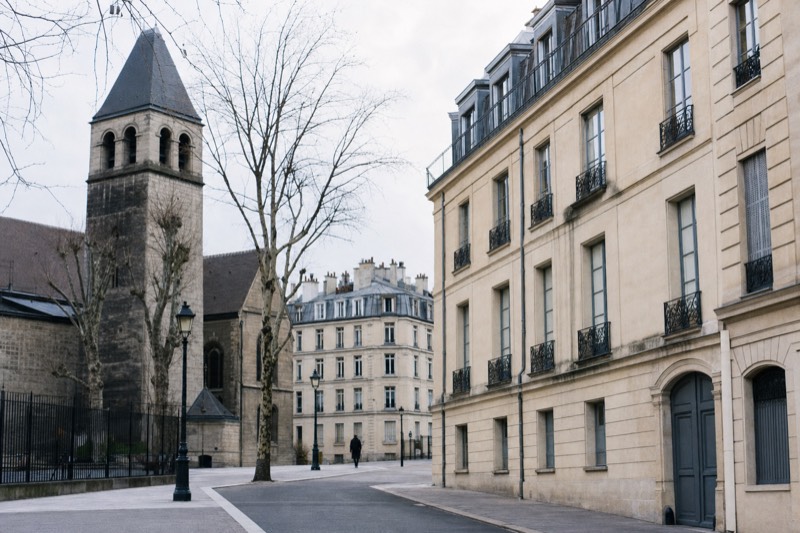
Is The Pantheon In Paris Free?
No, the Pantheon in Paris is not free for most adult visitors: it costs 16 euros in high season, with real free routes on five first Sundays a year and for under-18s and EU residents aged 18 to 25. Here is the full 2026 breakdown.
 By Julien Moreau, Paris Free Experiences Specialist and Local City Guide
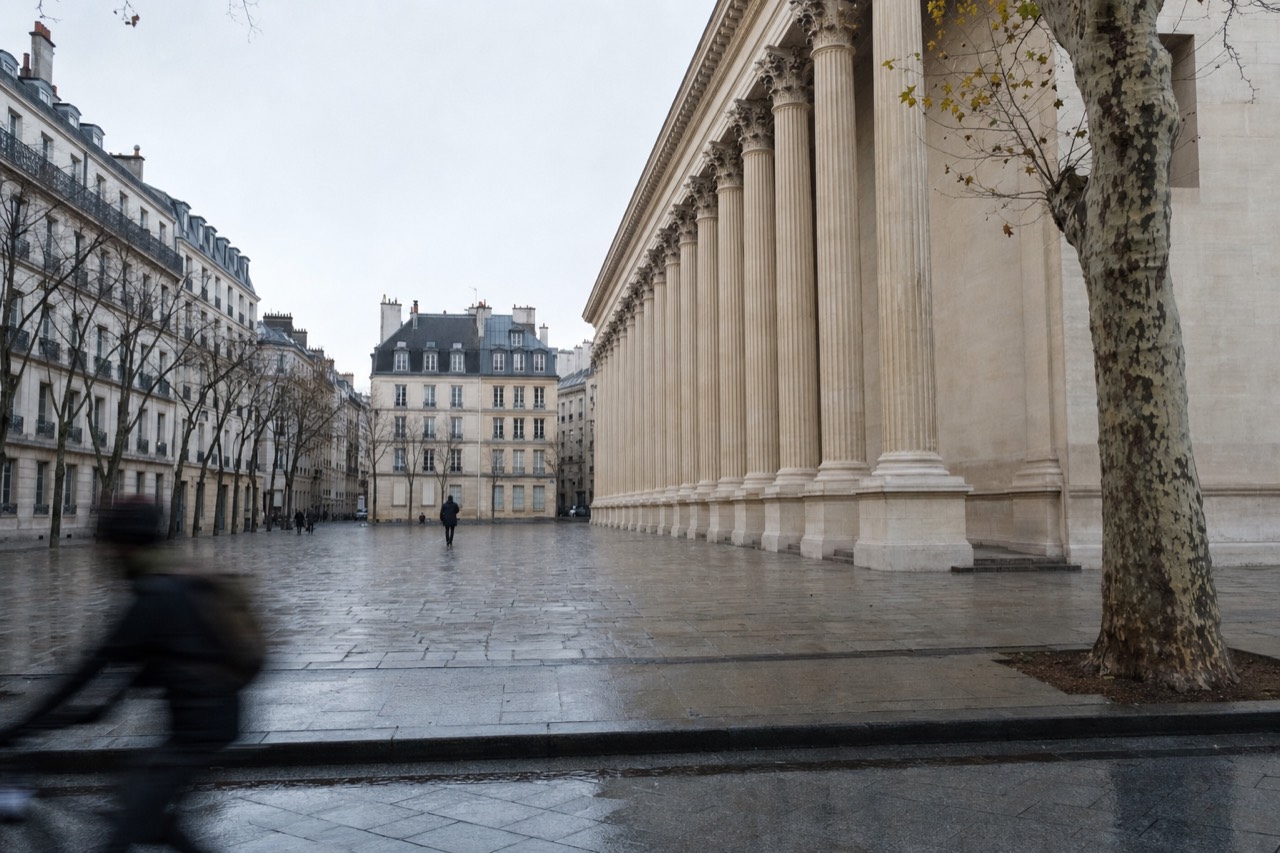
The Pantheon in Paris, the great neoclassical mausoleum on the Left Bank where France buries its heroes, is not free for a typical adult visitor. Entry costs 16 euros from 1 April to 30 September and 13 euros from 1 October to 31 March, with a 13-euro rate on Wednesdays year round (checked September 2026). Free routes exist and they are real: everyone enters free on the first Sunday of January, February, March, November and December, under-18s get in free every day, and so do 18 to 25 year olds who are nationals or residents of the European Union. Looking at the building from Place du Pantheon costs nothing at all, and the Latin Quarter around it is one of the densest free-activity zones in the city.
Is The Pantheon In Paris Free?
No, the Pantheon is not free for most adult visitors. A standard adult ticket costs 16 euros from 1 April to 30 September, drops to 13 euros on Wednesdays and from 1 October to 31 March, and the whole monument is free for everyone on the first Sunday of January, February, March, November and December (checked September 2026). Under-18s and EU nationals or residents aged 18 to 25 enter free every opening day.
That is the honest headline, and it is worth being blunt about it because a surprising amount of Paris advice online still implies the Pantheon is a free monument. It is run by the Centre des monuments nationaux, the same state body that runs the Arc de Triomphe and the Sainte-Chapelle, and like those sites it charges. The difference is that the Pantheon has kept a single price grid: unlike the Louvre, the Sainte-Chapelle and the Palais Garnier, it did not adopt the two-tier nationality pricing that spread through several Paris institutions from January 2026. A visitor from outside Europe pays the same 16 euros as a Parisian (checked September 2026).
One more thing changed that matters to anyone planning a visit. The Pantheon's dome panorama, the rooftop colonnade view that used to be part of the ticket, is closed for works, so the current ticket covers the nave and the crypt only (checked September 2026). The monument says so plainly on its own practical-information page. Anyone who remembers climbing up between the columns should recalibrate: today you go in at ground level, you go down to the crypt, and that is the visit.
The free routes are genuinely worth planning around, though. Five first Sundays a year is a real scheme, not a rumour, and it lines up with the winter free-day rule at the Arc de Triomphe, the Sainte-Chapelle and the Notre-Dame towers: first Sundays from November to March. The Conciergerie alone skips December, listing free first Sundays in January, February, March and November only. If your trip falls in those months, you can stack a free Pantheon morning with a free Arc de Triomphe afternoon on the same day.
If you want the neighbourhood explained rather than just the monument, the Latin Quarter is where a free walking tour earns its keep. These are free walking tours run by independent local guides and listed on GuruWalk, and this site neither runs them nor books them: there is no fixed price, and at the end each walker gives the guide what they think the walk was worth.
How Much Does The Pantheon Cost In 2026?
A full-price adult ticket to the Pantheon costs 16 euros from 1 April to 30 September, and 13 euros from 1 October to 31 March, with the 13-euro rate also applying on Wednesdays during the high-season months (checked September 2026). There is no non-European surcharge: the Pantheon kept one price grid while the Louvre and the Sainte-Chapelle went two-tier.
Here is the full price picture in one table, all figures from the monument's own practical-information page (checked September 2026):
| Ticket situation | Price | Notes |
|---|---|---|
| Adult, 1 April to 30 September | 16 euros | Standard high-season rate |
| Adult, Wednesday in high season | 13 euros | Midweek discount rate |
| Adult, 1 October to 31 March | 13 euros | Low-season rate |
| First Sunday of January, February, March, November, December | Free for everyone | The five-month free-day window |
| Under 18 | Free every day | Photo ID asked at entry |
| 18 to 25, EU or EEA national or resident | Free every day | Photo ID or residence proof asked |
| Reduced rates | Available for eligible groups | Check the monument's own page for the current list |
A couple of planning notes sit behind those numbers. The Wednesday discount is a quiet money-saver: if you are in Paris in June and flexible about days, a Wednesday visit is 3 euros cheaper than the same visit on a Thursday. And the October-to-March rate is the same 13 euros, which pairs neatly with the free first Sundays: a winter trip gets both the cheaper ticket and five chances a year at no ticket at all.
The other thing to know is what the ticket no longer includes. The dome panorama is closed for works, so the colonnade terrace is off the visit, and the ticket is nave and crypt only (checked September 2026). The crypt is the heart of the place anyway: Victor Hugo, Marie Curie, Alexandre Dumas, Voltaire, Rousseau, Emile Zola and Josephine Baker all lie there in the gloom under Foucault's pendulum swinging in the nave above. Two hours is a comfortable visit; one hour is enough if the crypt is the priority.
Planning the whole Left Bank day around the monument is where a free guided walk fits in, and the Saint-Germain and Saint-Michel walk is the natural one: it starts at Place Saint-Germain des Pres, ten minutes' walk from the Pantheon's steps, and it is free, with the guide paid what you choose to give at the end.
When Is The Pantheon Free For Everyone?
The Pantheon is free for every visitor on the first Sunday of January, February, March, November and December (checked September 2026). There is no free first Sunday from April to October. The free day needs no booking: you join the queue and walk in, and the winter months are the quietest the building ever gets.
This is one of the clearest free-day schemes in Paris because it follows the Centre des monuments nationaux' winter rule exactly. The state monuments body publishes one grid for all its Paris sites: free for all on the first Sunday of each month from November to March, with a couple of exceptions elsewhere in France (see What Is The Cheapest Month To Visit Paris?). The Pantheon applies it without complications.
The practical consequences are worth spelling out. First, if your trip is in the summer half of the year, there is no free Sunday coming: a July visitor pays the full 16 euros, full stop (checked September 2026). Second, the winter free Sundays are also the months when the Pantheon is at its least crowded, which makes them doubly good. Third, the scheme stacks: the same free Sunday applies at the Arc de Triomphe, the Sainte-Chapelle and the Notre-Dame towers in those five months, while the Conciergerie runs it in January, February, March and November only, skipping December, so one well-chosen Sunday in February can still knock out five paid monuments in a single day.
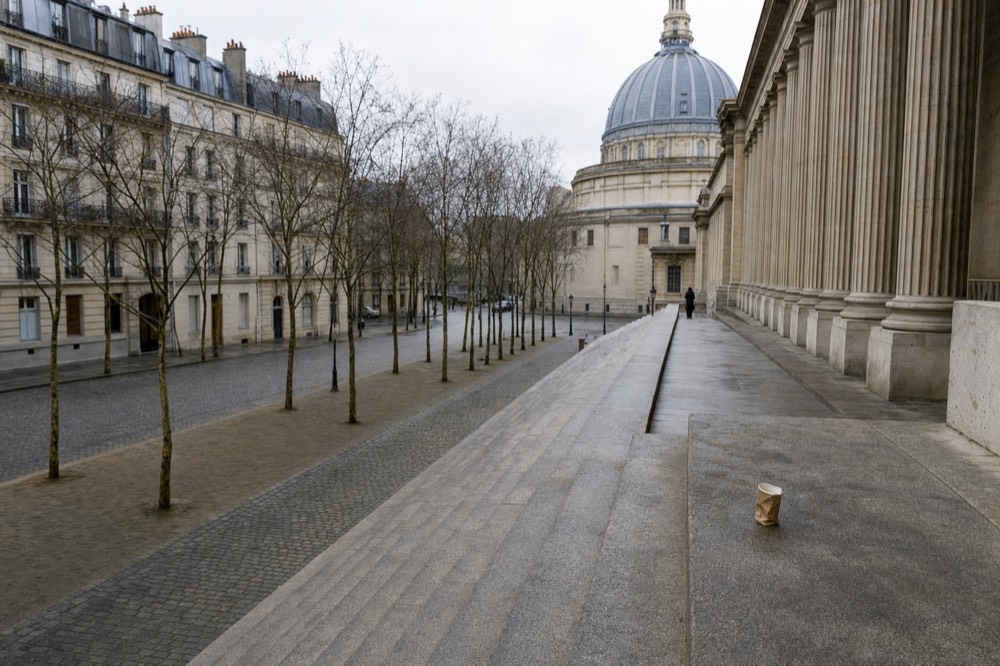
One caution from the wider free-day picture in Paris: a free day is not an empty day. At the Musee d'Orsay, whose own free first Sunday runs all year, the free slots sell out online and the museum has refused walk-ups at capacity, and visitors describe those Sundays as mobbed (see Can You Visit The Musee d'Orsay For Free?). The Pantheon's winter free Sundays have the advantage of low season, but arrive for the opening rather than mid-afternoon if you want the crypt to yourself.
Who Gets Into The Pantheon Free Every Day?
Under-18s of any nationality enter the Pantheon free every opening day, and so do 18 to 25 year olds who are nationals or residents of a European Union or European Economic Area country, on photo ID (checked September 2026). This is the same age rule the Louvre and the Musee d'Orsay run, and it is the single biggest free route into the monument.
For a family, that rule does most of the work. Two adults with two teenagers pay for exactly two tickets, not four. For a group of under-25 European students the monument is effectively a free attraction all year, which is why the crypt on a weekday afternoon in term time is full of French school groups being marched past Marie Curie.
Bring the proof. The staff at the door ask for photo ID for the age exemptions, and a passport is the simplest answer for a visitor. The rule is written as 18 to 25 inclusive at the sister monuments, so nobody should read it as cutting off at 24.
The Pantheon also participates in the wider exemptions the national monuments run: jobseekers, people on French minimum social benefits, holders of the French Education Pass, ICOM and ICOMOS card holders, and visitors with a disability plus one companion. If one of those applies to you, the monument's own practical-information page lists the current full set, and it is worth a minute's check before you queue.
What Can You Actually See Inside The Pantheon?
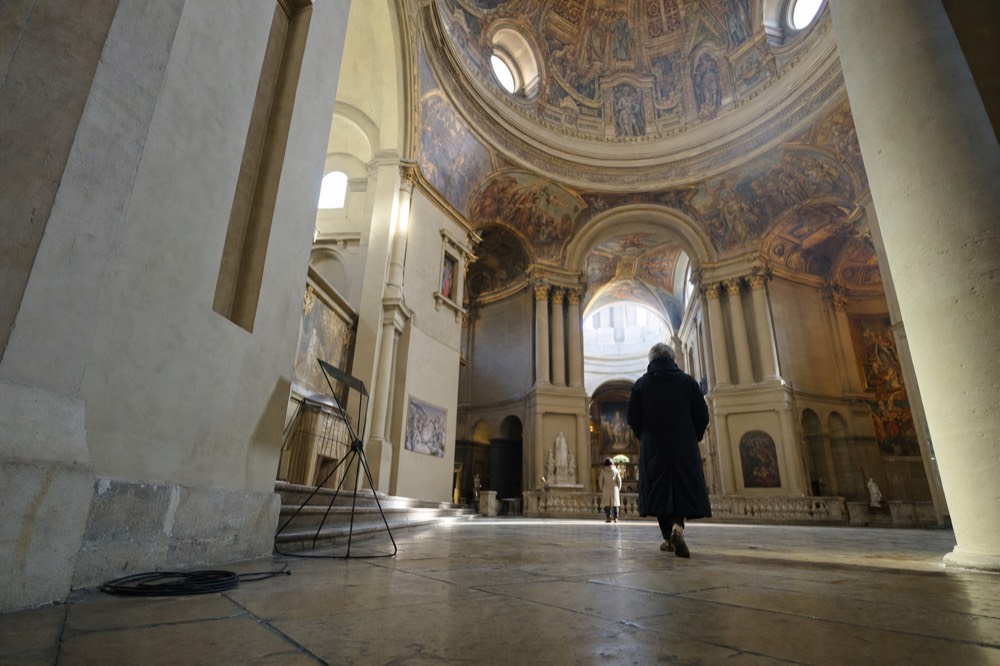
Inside the Pantheon you see the vast nave with Foucault's pendulum swinging from the dome, the 19th-century frescoes along the walls, and the crypt where Victor Hugo, Marie Curie, Alexandre Dumas, Voltaire, Rousseau, Emile Zola and Josephine Baker are buried (checked September 2026). The dome panorama is closed for works, so the ticket is nave and crypt only.
The pendulum is the first thing everyone looks for, and it is genuinely there, hanging from the crossing of the nave. Leon Foucault used the building to demonstrate the rotation of the Earth, and a replica swings in the same spot today. The frescoes above tell the story of Saint Genevieve, to whom the building was originally dedicated as a church before the Revolution repurposed it as a temple of the nation.
The crypt is the reason most people come. The long corridors hold the tombs of the writers, scientists and statesmen France has chosen to honour, and the recent additions are part of the story: Marie Curie, Alexandre Dumas and Josephine Baker were all moved here long after their deaths, each pantheonisation a national event in its time. The inscriptions, the black marble, the echo of school groups: it is a solemn, slightly cold space, and it is the most concentrated display of French national memory anywhere in the city.
The building's own history is the third layer. Begun under Louis XV as a church promised to Saint Genevieve, completed on the eve of the Revolution, converted into a mausoleum by revolutionary decree, it has swung back and forth between church and temple several times before settling. The inscription on the pediment, "Aux grands hommes, la patrie reconnaissante", to the great men, the grateful homeland, dates from the Revolution and has outlasted every regime since.
What Is Free Around The Pantheon In The Latin Quarter?
Everything on the Pantheon's doorstep that costs nothing: the Luxembourg Gardens a few minutes south, the Sorbonne's visible facades, the Roman arenas of Lutece, the medieval churches of Saint-Etienne-du-Mont and Saint-Julien-le-Pauvre, the Seine quays, and the Jardin des Plantes a short walk east. The Latin Quarter is one of the best free walking areas in Paris.
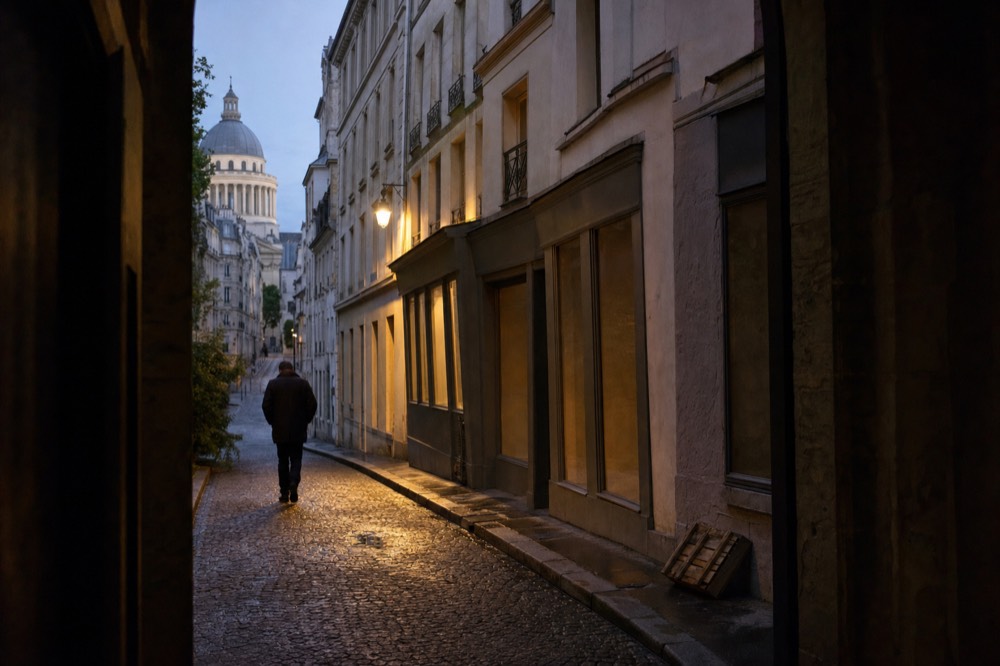
Start with the immediate square. Place du Pantheon, the rue Soufflot axis toward the Luxembourg Gardens, and the rue Mouffetard market street running south are all free to wander and all within five minutes. The Luxembourg Gardens themselves are free, open long hours that shift with sunset, and their summer programme of small free exhibitions along the railings is something almost no guide mentions (checked September 2026).
East of the monument, the Arenes de Lutece are a genuinely free Roman ruin tucked between apartment blocks: a real Gallo-Roman amphitheatre, open daily, free, and easy to miss. The Musee de Cluny, which holds the Roman baths, charges, but the visible fragment of the baths on boulevard Saint-Michel gives you the era for nothing. The churches are free too: Saint-Etienne-du-Mont behind the Pantheon, with its remarkable rood screen, and Saint-Julien-le-Pauvre across the river approach, both open to visitors without charge.
A free walking tour ties the district together, and two fit this exact geography. The Saint-Germain and Saint-Michel walk covers the Left Bank between the two saints, runs 2 hours in English from Place Saint-Germain des Pres, and carries a 4.96 rating across 494 reviews on GuruWalk (checked September 2026). It is a free walking tour run by an independent local guide, listed on GuruWalk, and you pay what you want at the end.
For the Pantheon's own story, the Pantheon and Roman Ruins Walk is the closer match: a free walking tour, also on GuruWalk, that pairs the monument with the Roman layers of the Left Bank, 2 hours in English from Place Saint-Michel, rated 4.81 across 199 reviews (checked September 2026). Between the two of them, the whole paid 16-euro question shrinks, because the neighbourhood's history is being walked for whatever you decide it was worth.
If you are building a full free day on the Left Bank, our guide to free things to do in the Latin Quarter lists the parks, churches and viewpoints in order, and our answer on whether the Eiffel Tower is free covers the same free-versus-paid question for the city's other big monument. This whole site, Free Things To Do In Paris, exists to answer exactly this kind of question with the monument's own published figures, and the Pantheon's own practical-information page, published by the monument itself, is the place to confirm prices and hours before you go.
The Pantheon is not free for a typical adult: it costs 16 euros in high season and 13 euros in low season and on Wednesdays, with free entry for everyone on five first Sundays a year and for under-18s and young EU residents every day (checked September 2026). The answers below cover the free days, the age exemptions, the closed dome and how long a visit takes.
Common Questions About The Pantheon In Paris
Is the Pantheon in Paris free?
No, not for most adults. A standard ticket costs 16 euros from April to September and 13 euros from October to March, with 13 euros on Wednesdays year round (checked September 2026). It is free for everyone on the first Sunday of January, February, March, November and December, and free every day for under-18s and EU or EEA nationals and residents aged 18 to 25.
When is the Pantheon free?
On the first Sunday of January, February, March, November and December, entry is free for everyone, with no booking needed (checked September 2026). There is no free first Sunday from April to October.
Do students get into the Pantheon for free?
Only if they are 18 to 25 and nationals or residents of a European Union or European Economic Area country, with photo ID. Student status itself does not grant free entry; the rule is age plus nationality or residence (checked September 2026).
Can you go up to the Pantheon's dome?
No. The dome panorama and the colonnade terrace are closed for works, so the ticket covers the nave and the crypt only (checked September 2026). The monument's own page states this plainly.
Is the outside of the Pantheon free to see?
Yes, completely. Place du Pantheon, the colonnade facade, the rue Soufflot view toward the Luxembourg Gardens and the surrounding Latin Quarter streets cost nothing and are walkable at any hour.
How long does a Pantheon visit take?
About one to two hours. The nave with Foucault's pendulum and the frescoes takes half an hour, and the crypt with the tombs of Hugo, Curie, Dumas and Baker takes the rest. Without the dome panorama, there is no long climb to budget for.